Student city = knowledge city

by Alexandra den Heijer

In the beginning of November I visited Belgian student city Ghent with DUWO (student housing), to compare the Belgian and Dutch student housing market. Ghent has a huge and still growing student population – approaching 70.000 (population Ghent is about 250.000). The cities of Ghent and Leuven have Belgium’s largest student populations: essential for the regional and national knowledge economy. Student housing is a ‘critical chain’ in the transition from a student city to a knowledge city. When students live in a city, they are more likely to get attached to the city, both socially and economically.

Student city Ghent in Belgium - view from the famous university library building "boekentoren" http://en.wikipedia.org/wiki/Boekentoren

Student city Ghent in Belgium – view from the famous university library building “boekentoren

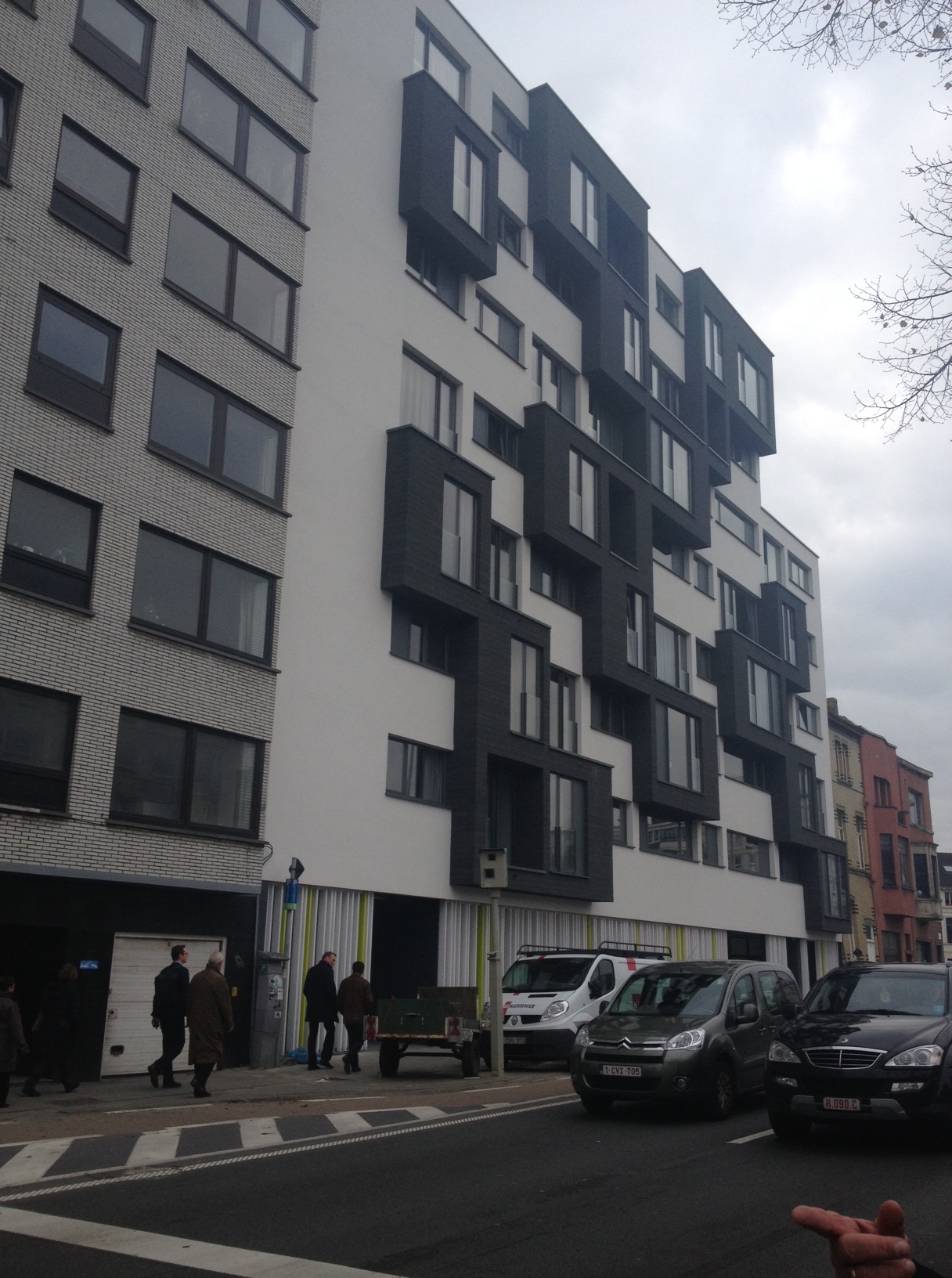
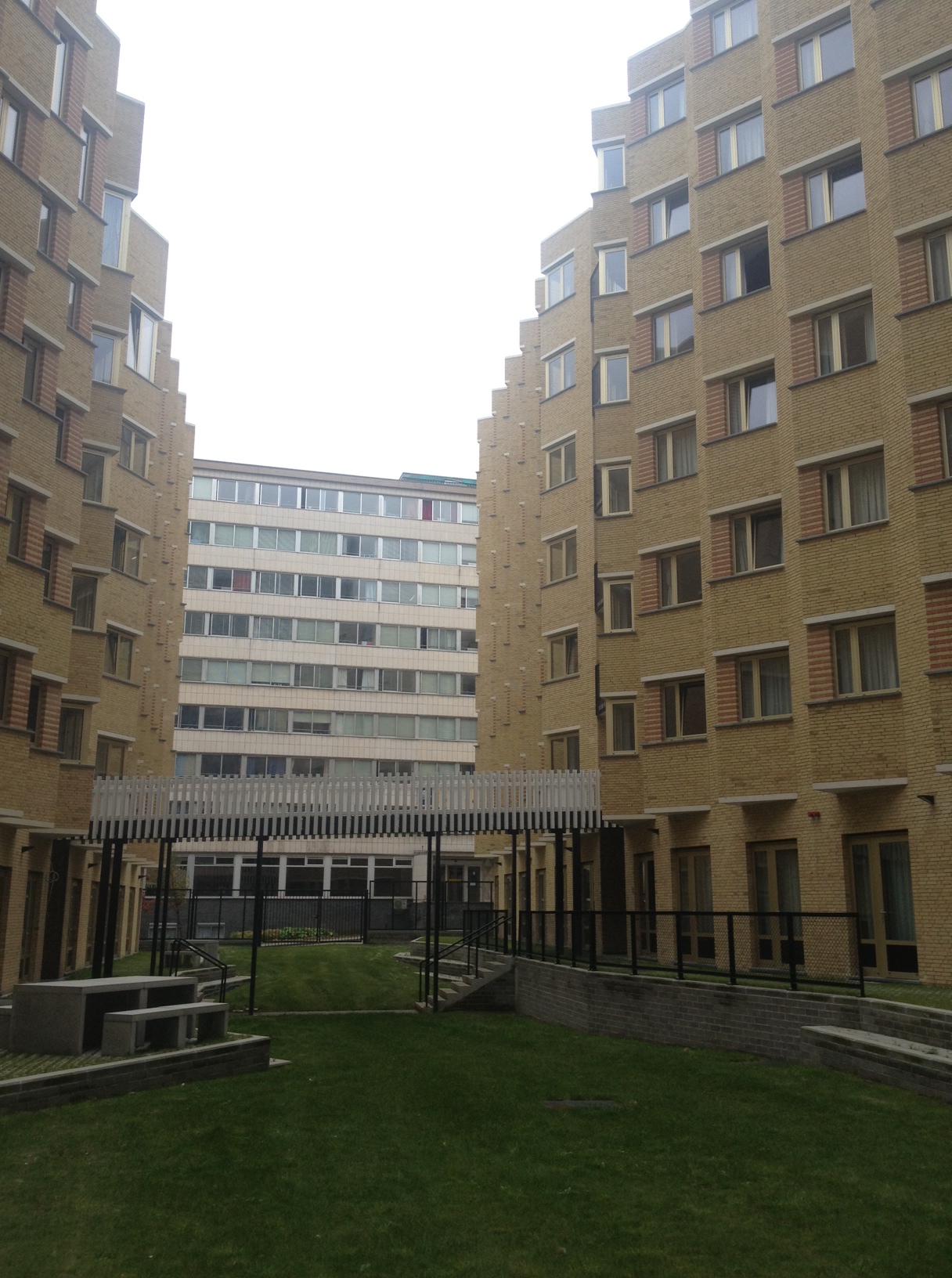
Both the Ghent University and the city of Gent have policies (and strategies) to accommodate national and international students within the city boundaries. We visited different projects. The photos below show two examples: a public-private partnership with the university as a client (campus Kantienberg) and a private initiative (“Ter Plaeten UpKot”).

private student housing project in Ghent by Upgrade Estate http://www.upgrade-estate.be/studentenhuis/omschrijvingen/terplaetenupkot.php

private student housing project in Ghent – “Ter Plaeten UpKot” – by Upgrade Estate

public-private student housing project Kantienberg, client: Ghent University - http://www.bamppp.com/projects/ppp-kantienberg

public-private student housing project Kantienberg, client: Ghent University

The crucial role of student housing in “student cities becoming knowledge cities” was also confirmed by speakers of the conference Class of 2020 (see website for report and more information). And – equally important – what happens after they graduate? Do they (have to) leave their student city (because there is no alumni housing strategy)? The city of Ghent is also struggling with that issue: where do our alumni go and what do we have to do to keep this talent for “Ghent knowledge city”? (more info about the potential of Ghent: website)

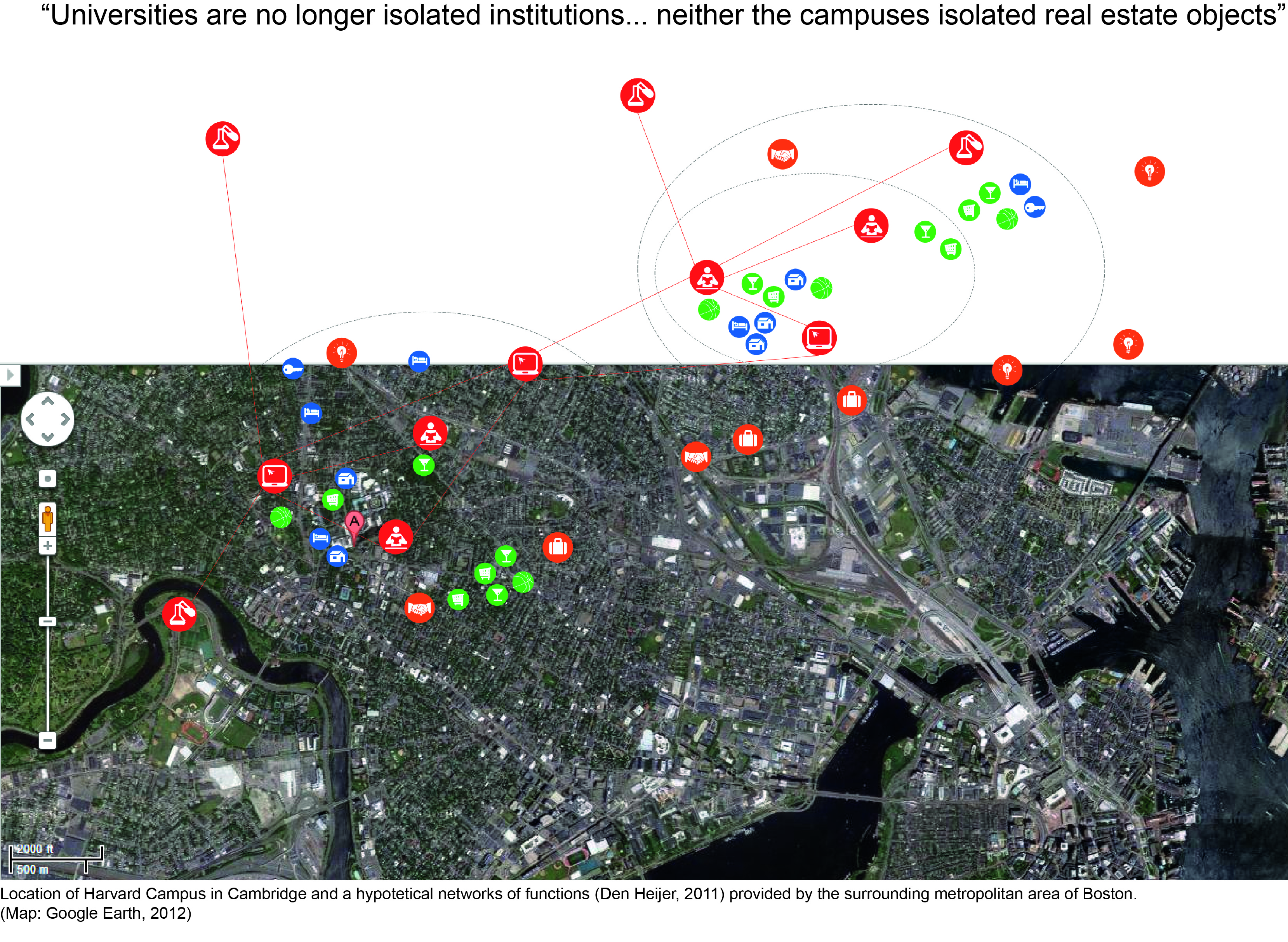
At another conference in November – Campus 2020 – my colleague and PhD student Flavia Curvelo Magdaniel presented her ‘univer-city research’, highlighting our observation and vision that the campus is no isolated area, but a network of functions – see figure below.

the campus as a network of functions - source: Flavia Curvelo Magdaniel, 2012 (presented at conference "Campus 2020", November 22, 2012)

source: Flavia Curvelo Magdaniel, 2012 (presented at conference “Campus 2020”, November 22, 2012)

Coming back on the title of this post: “student city = knowledge city”. This is true if a city succeeds in not only attracting students for higher education, but also in retaining the talent for economic growth. Student housing and ‘alumni housing’ appears to be a critical chain. For papers and articles on this subject, see PUBLICATIONS and RELATED RESEARCH.

Leave a comment

Filed under international network

Moving November – from Delft to Delhi

by Alexandra den Heijer

November was so overwhelming that I did not find the time – or energy – for a new post. Last month we visited India. It was actually my only trip this year that did not have anything to do with work. In fact, I almost forgot work when we were there. Even though there were many links to my research: the importance of physical infrastructure for education.

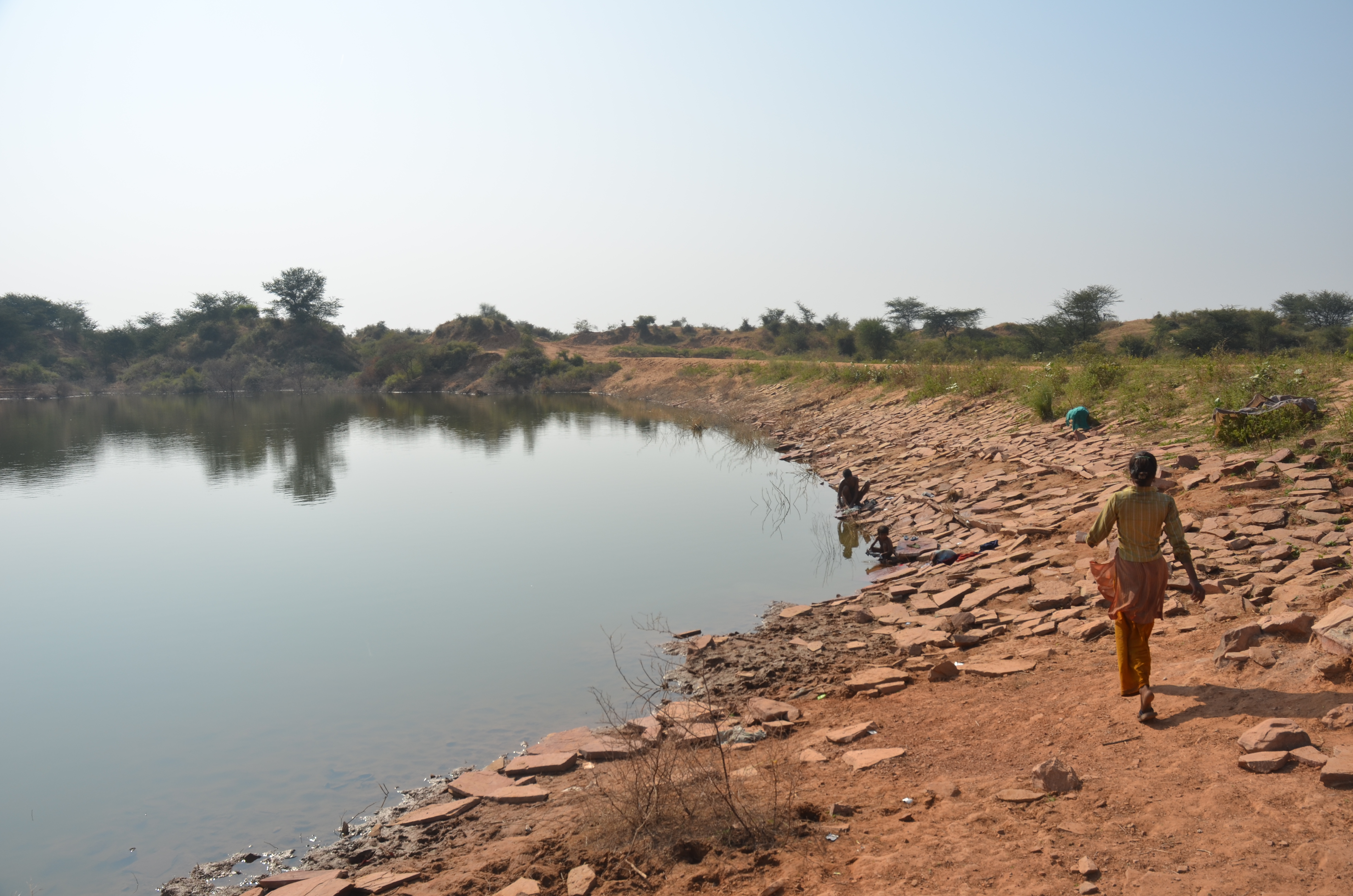
adding dams in Karauli, India - enabling the (female) population to focus on education instead of water

the result of our project to add dams in Karauli, India – enabling the (female) population to focus on education instead of water; more info in English http://www.karauli.com and in Dutch http://www.stichtingkarauli.nl/

In a small group we visited the Karauli area to see the dams (that hold back water after the wet monsoon, the resulting reservoir being used as a water supply). Our last visit was in 2005, before the dams were constructed. Without the dams young women and girls spent their days walking to get water. The project is combined with investments in schools and courses for women. We work in close collaboration with the maharaja of Karauli. We were amazed by the results after 7 years: 7 effective dams. The importance of physical infrastructure for education…

In my next post I will get back to what else happened in the past month – all related to the importance of physical infrastructure (university campuses, learning landscapes, student housing) for higher education and the knowledge economy…

PS New publications of the past months can be downloaded: PUBLICATIONS / RELATED RESEARCH

Leave a comment

Filed under international network

Bohemian academic life in Prague

by Alexandra den Heijer

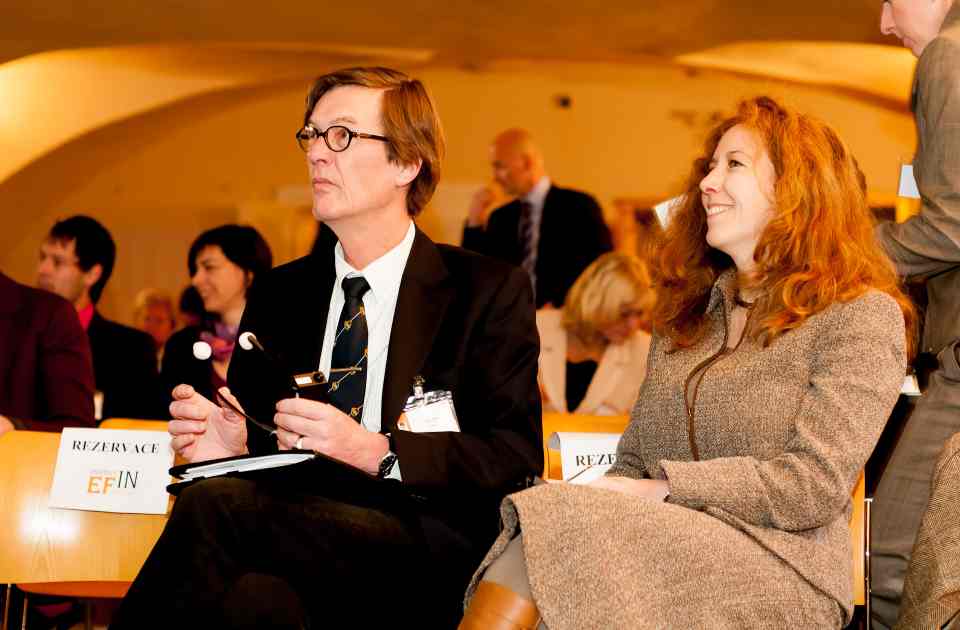
Yesterday I gave a lecture in Prague, Czech Republic by invitation of the Czech Ministry of Education, Youth & Sports (Ministerstvo školství, mládeže a tělovýchovy) for about 80 representatives of tertiairy education institutions, including many Czech universities.

conference for project EFIN in Prague – two of the three international speakers: Jon File (CHEPS) and Alexandra den Heijer (TU Delft)

The conference was part of the EFIN project (http://efin.reformy-msmt.cz/, only in Czech): promotion and development of effective management principles. I want to thank dr. Aleš Vlk (Alevia) and prof. Josef Basl (main guarantor EFIN) for their hospitality.

Again, it was clear – by the reactions and questions from the audience – that the challenges for universities are the same in many European countries. Struggling with the limited budgets, the increasing demands of students and professors, the low occupancy rates (utilization of space) and the aging campus. However, the cultural heritage and the bohemian quality of place are assets – cards we should play in the global “war on talent”. The trade-off is quantity for quality: less territory, less m2 per user and more quality per m2 and sense of place in return.

During the conference I also learned from the other international speakers Dennis Dunn (Manchester Metropolitan University) and Jon File (CHEPS – Centre for Higher Education Policy Studies). Higher education management – including campus management – is a huge responsibility which requires skills and management information. The latter I hope to supply with every lecture and publication. The hand-out of my presentation – including all photos – can be downloaded (see DOWNLOADS). Below the four propositions that I ‘defended’ during my lecture are translated in Czech, thanks to Aleš Vlk.

1. Each university goal can be frustrated by the physical campus. Každý cíl vysoké školy může být zmařen kampusem / infrastrukturou.

2. It takes a crisis – for example a fire – to change the academic workplace. Ke změně akademického pracoviště může pomoci krize – například požár.

3. The innovative and flexible knowledge economy can bring new life to obsolete industrial heritage buildings. Inovativní a flexibilní ekonomika založená na znalostech může vnést nový život do zastaralých průmyslových historických budov.

4. The campus of the future is a city. Kampus budoucnosti je město.

See PROPOSITIONS for these propositions in 4 more languages – Spanish, French, German and Dutch – translated by native speakers.

Leave a comment

Filed under international network

Students bring back life to our campuses, after summer

by Alexandra den Heijer

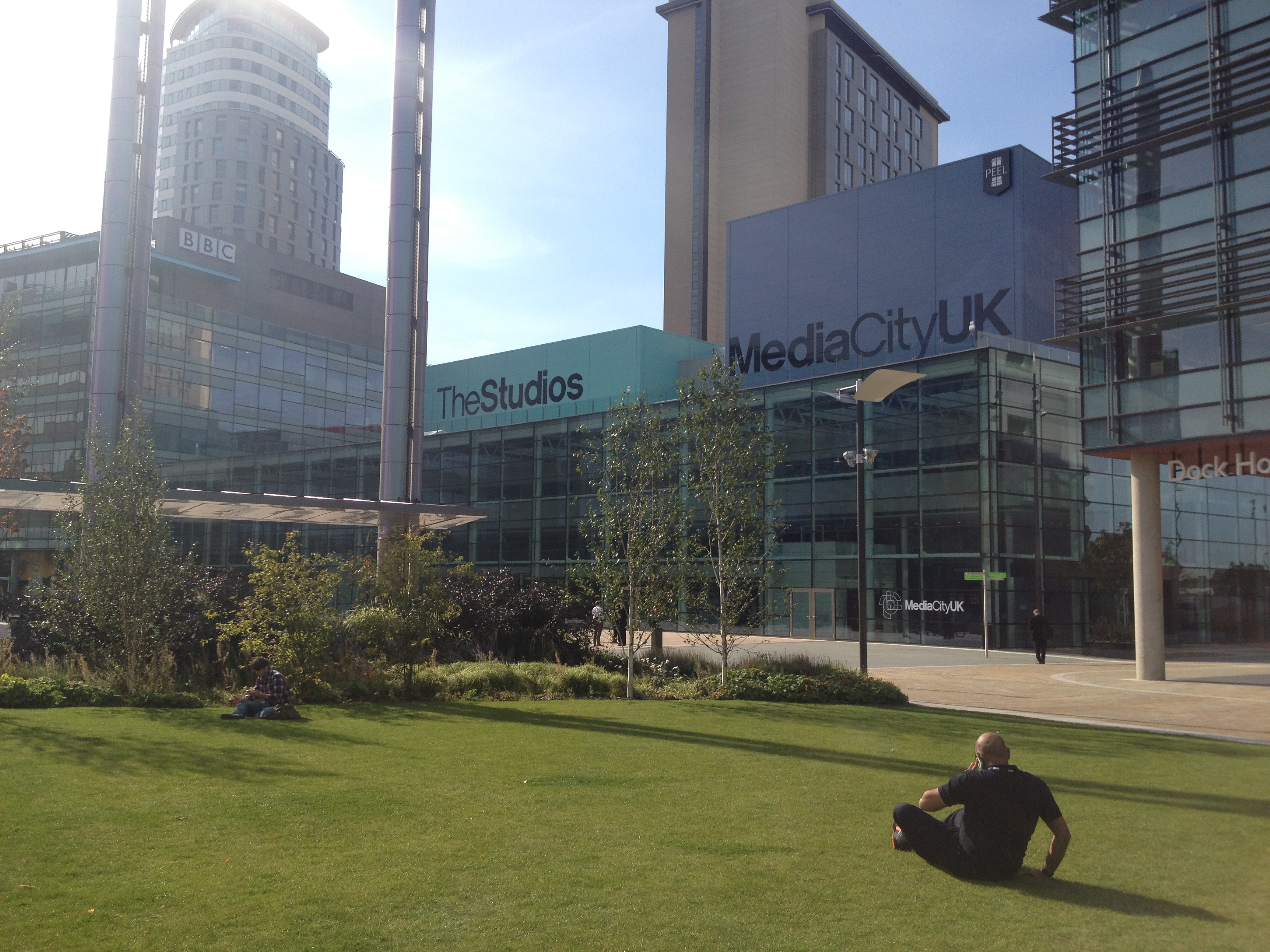
This week the academic year has started in the Netherlands. I was happy to see the students again for many reasons, including the fact that they really bring back life to our campuses and buildings, after summer. Today, I am in England, enjoying the hospitality of University of Salford. Yesterday I gave a dinner speech (see DOWNLOADS for hand-out) and I got a chance to see parts of their campuses, including MediaCity:UK, a campus they share with the BBC, Adobe and ITV (among others).

MediaCity:UK on a sunny Thursday, 2 weeks before the students arrive

MediaCity:UK is located at Salford Quays on the banks of Manchester’s historic ship canal. The vision is to become a leading international hub for the creative and digital sectors, and a vibrant destination to work, live and play. The students will arrive in two weeks, when the new academic year starts for UK universities. For more information see http://www.mediacityuk.co.uk/ and http://en.wikipedia.org/wiki/MediaCityUK.

University of Salford has more campuses and is very much aware of the university’s role in the local economy: “With a turnover of some £180.5m, we take our responsibility towards the city of Salford very seriously. The University is one of the area’s biggest employers and makes a significant contribution to the local economy.” (source: http://www.salford.ac.uk/)

one of the “red-brick buildings” on University of Salford’s campus

In the Netherlands the academic year has started last Monday. I wish our students a very productive and inspiring year. Our building has changed from BK (holiday) village to BK city again…

Leave a comment

Filed under international network

Back to South Korea, with students (looking back)

by Alexandra den Heijer

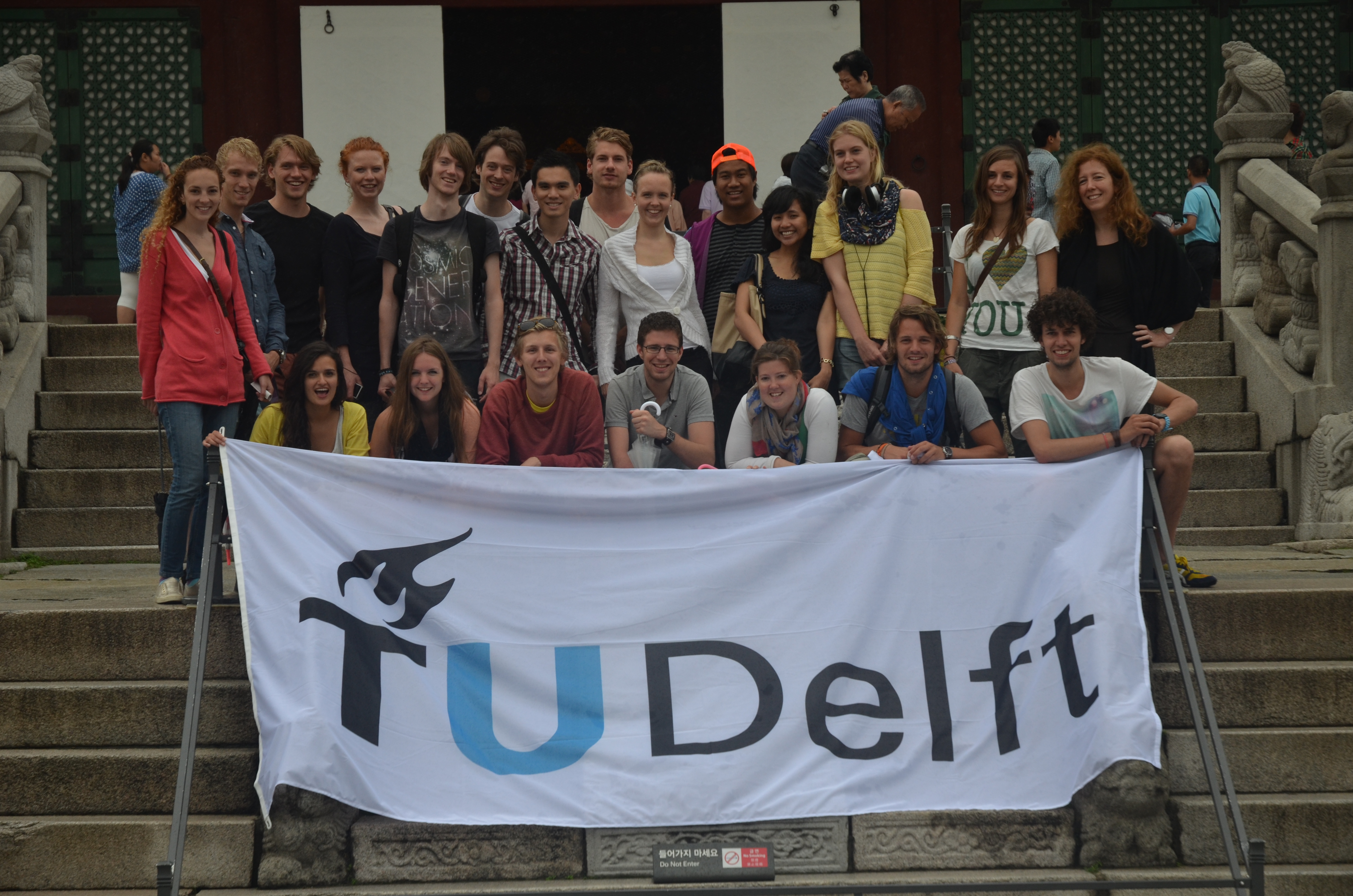
In the past two weeks professor Hans de Jonge and I travelled through South Korea with 24 of our TU Delft students (see previous post). We started by visiting harbour city Busan in the south. The urban municipal planning office of Busan city welcomed us on the first day and showed us some iconic projects like the Busan Cinema Centre and the construction site of the Busan Lotte Tower (see group photo below).
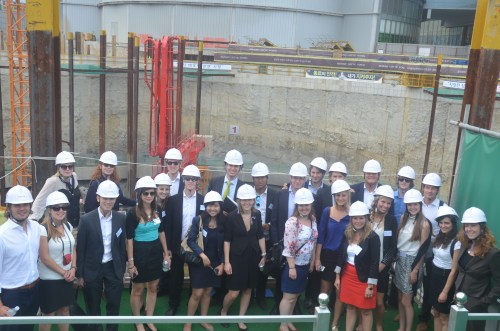
visit construction site Lotte Tower Busan

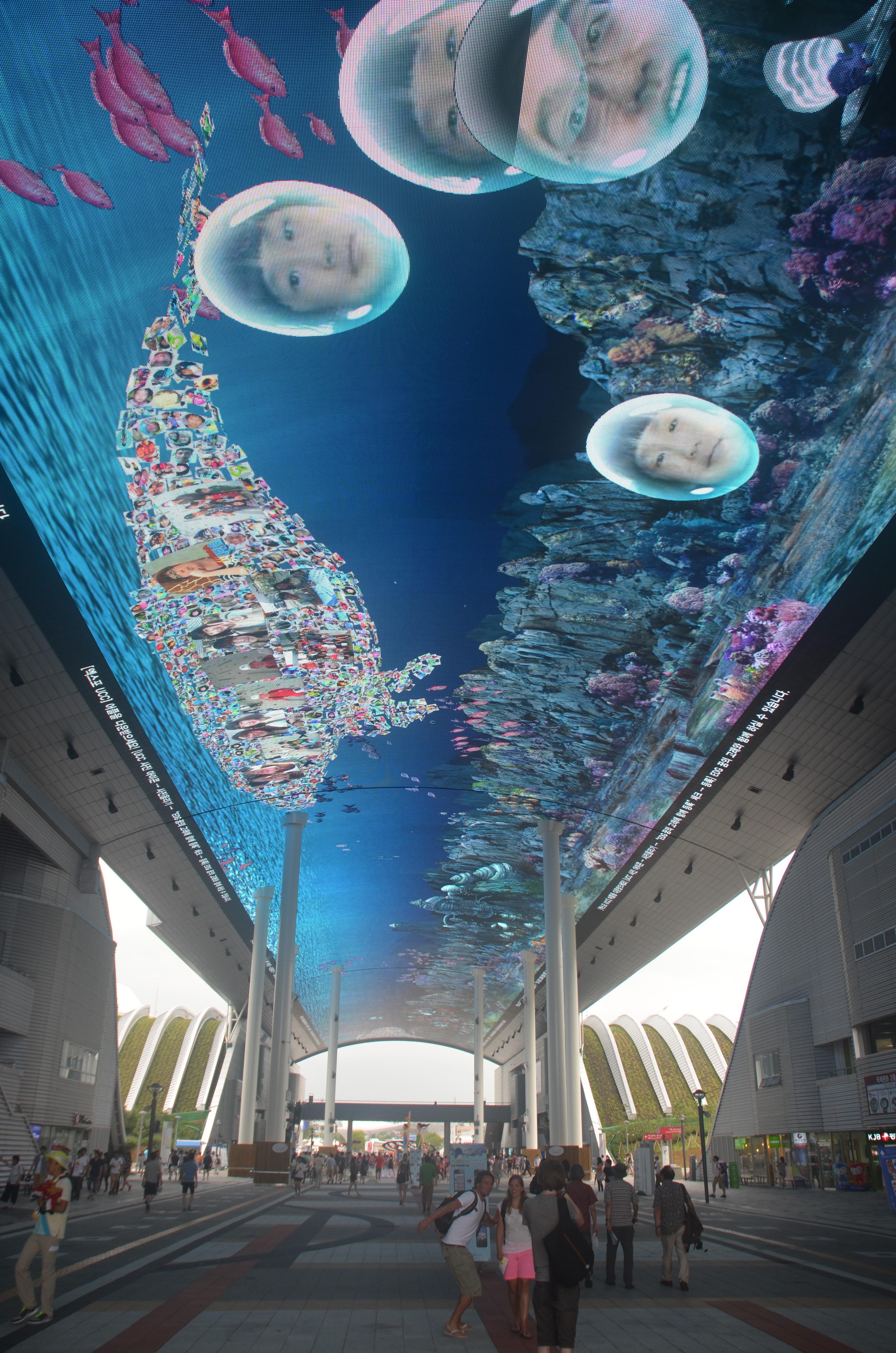
After Busan we visited the 2012 Expo in Yeosu with the theme “The living ocean & coast” – see 2012 Expo website for more info.
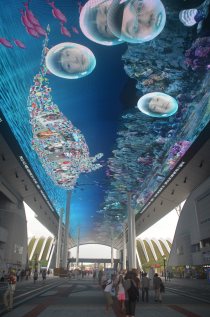
Expo 2012 in Yeosu – LED roof

Dutch design @ the Dutch pavillion – the first pavillion of many country and theme pavillions we visited
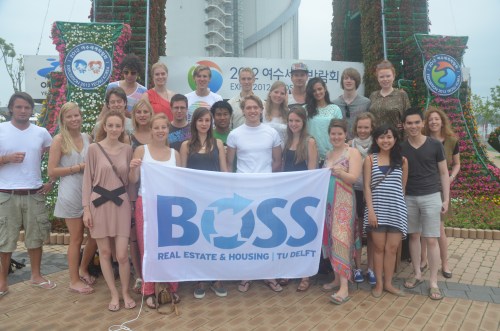
student association BOSS organised this study trip – this photo was taken by prof. Hans de Jonge at the 2012 Expo in Yeosu – five students formed the organising committee: Dora Baalman, Coen Geesing, Luuk Kops, Roberta Gutierrez Llaguno and Peter Horst

On Saturday July 14 we arrived in Seoul where we stayed for more than a week. In Seoul our academic and business program became really busy, with visits to Dongdaemun Design Plaza (architect Zaha Hadid) and Hanyang University on Monday and to Sangji Architects & Engineers (see website) and Heyri Art Village on Tuesday.

visiting the construction site of Zaha Hadid’s Dongdaemun Design Park & Plaza – after an inspiring presentation of one of the project architects

thanking Sangji architects for their presentations – on the right: two members of the BOSS organising committee, students Peter Horst and Dora Baalman

At Hanyang University all professors contributed to an academic session – about (the changing context of) urban planning – also intended to compare education and research of both universities.

after giving lectures at Hanyang University – meeting the dean, the vice-dean and a professor of the department of Urban Planning and Engineering

group photo at the campus of Hanyang University

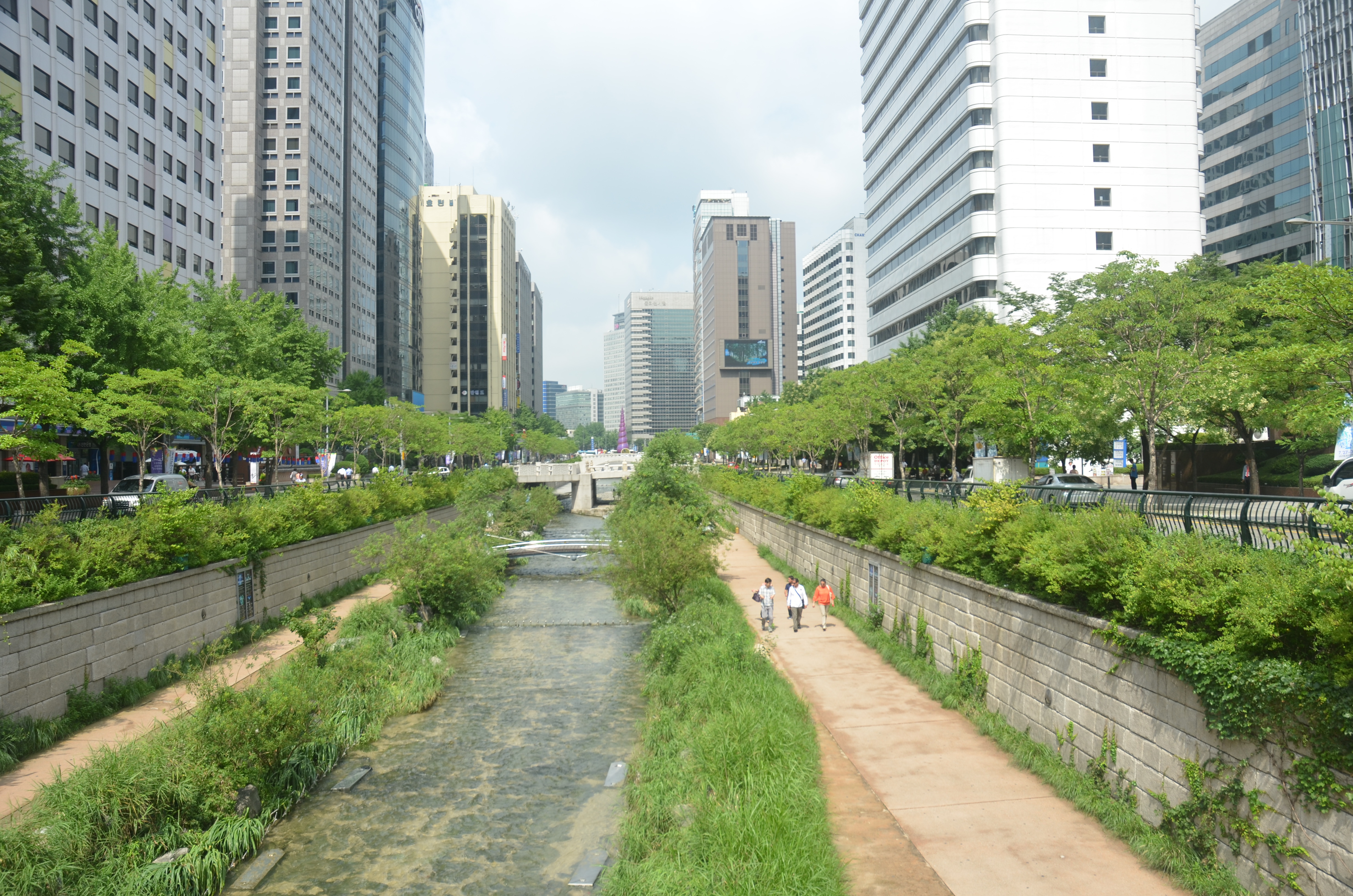
Some other photos of the first three days in Seoul are shown below, including my favorite urban project “Cheonggyecheon”: an 8.4 km (5.2 miles) long, modern public recreation space in downtown – see info on wikipedia.
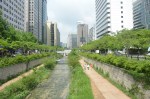
my favorite Seoul project: Cheonggyecheon – flowing through downtown

part of our group in front of Seoul’s Gyeongbokgung Palace…

in front of Seoul’s Gyeongbokgung Palace… zoomed in

On Wednesday we visited Seoul Development Institute – in a series of presentations of Dutch and Korean speakers we compared Netherlands and South Korea and Amsterdam – or better: our Randstad region – and Seoul. In the afternoon we were impressed by both the size and work of Samoo architects (see Samoo website). On Thursday we visited “The Green” by recommendation of Dutch architecture firm Architecten Cie / architect Frits van Dongen who designed part of a new sustainable housing area for client LH – Korea Land & Housing Corporation (see LH website). The Green demonstrates the newest sustainable measures for housing projects (see photos, also with our hosts).
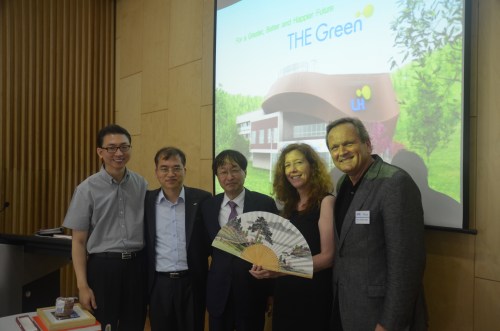
visiting The Green by LH Housing – a photo with our hosts

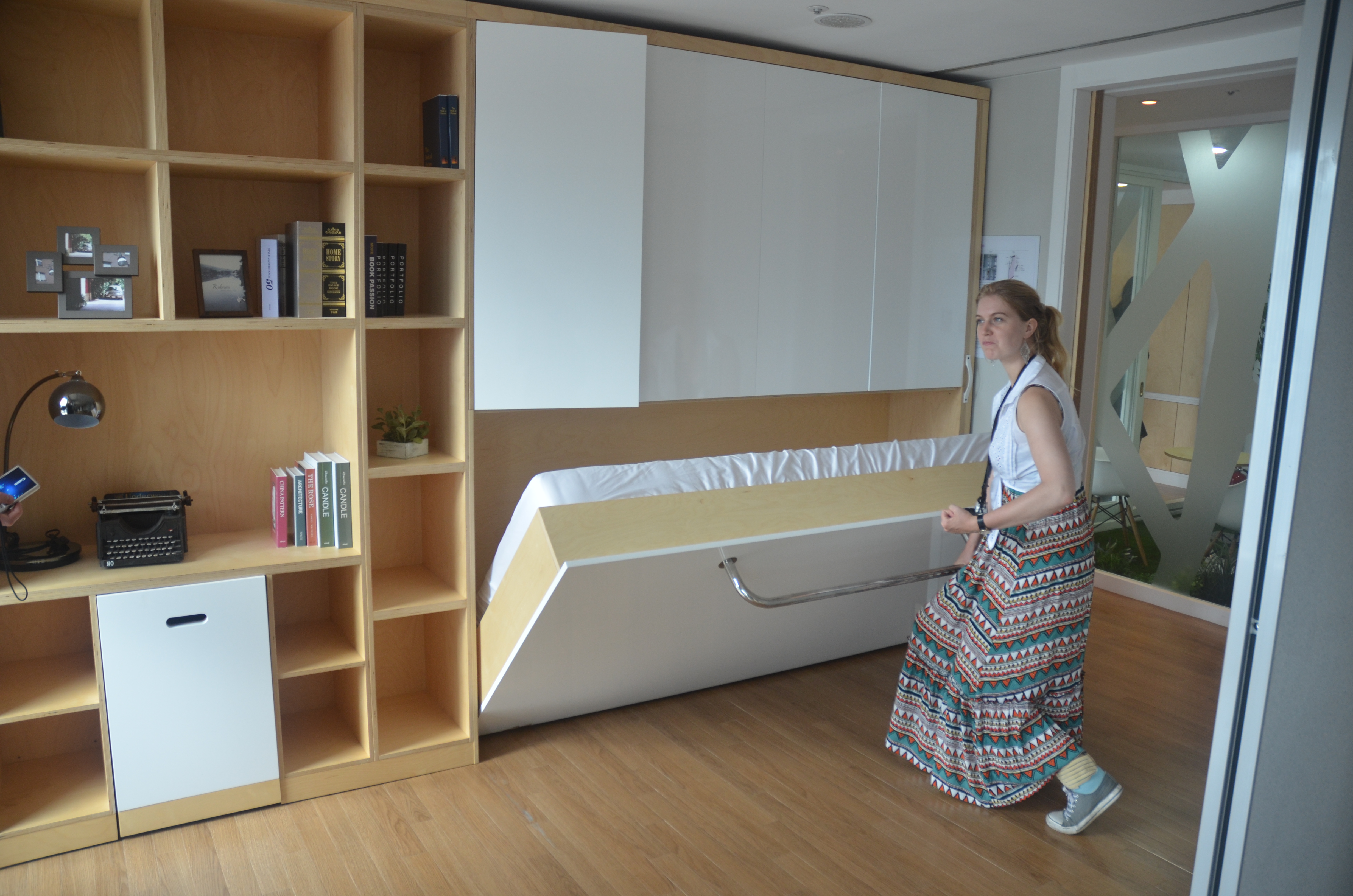
sustainable housing unit – with many eco-friendly measures and a lot of flexibility in the floor plan


sustainable housing unit – also demonstrated in the Green as a complete mock-up scale 1:1

On Thursday afternoon we got a tour at Ewha Womans University. Last month I was impressed by both the ECC project (see photo and text in post) and this prestigious university. One woman started this university in 1886, which still shows in the university name: “Womans” from Woman’s, see EWHA on wikipedia.
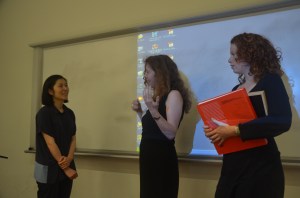
thanking our host for the tour of (the ECC building of) Ewha Woman’s University
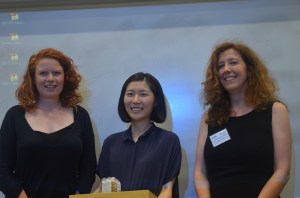
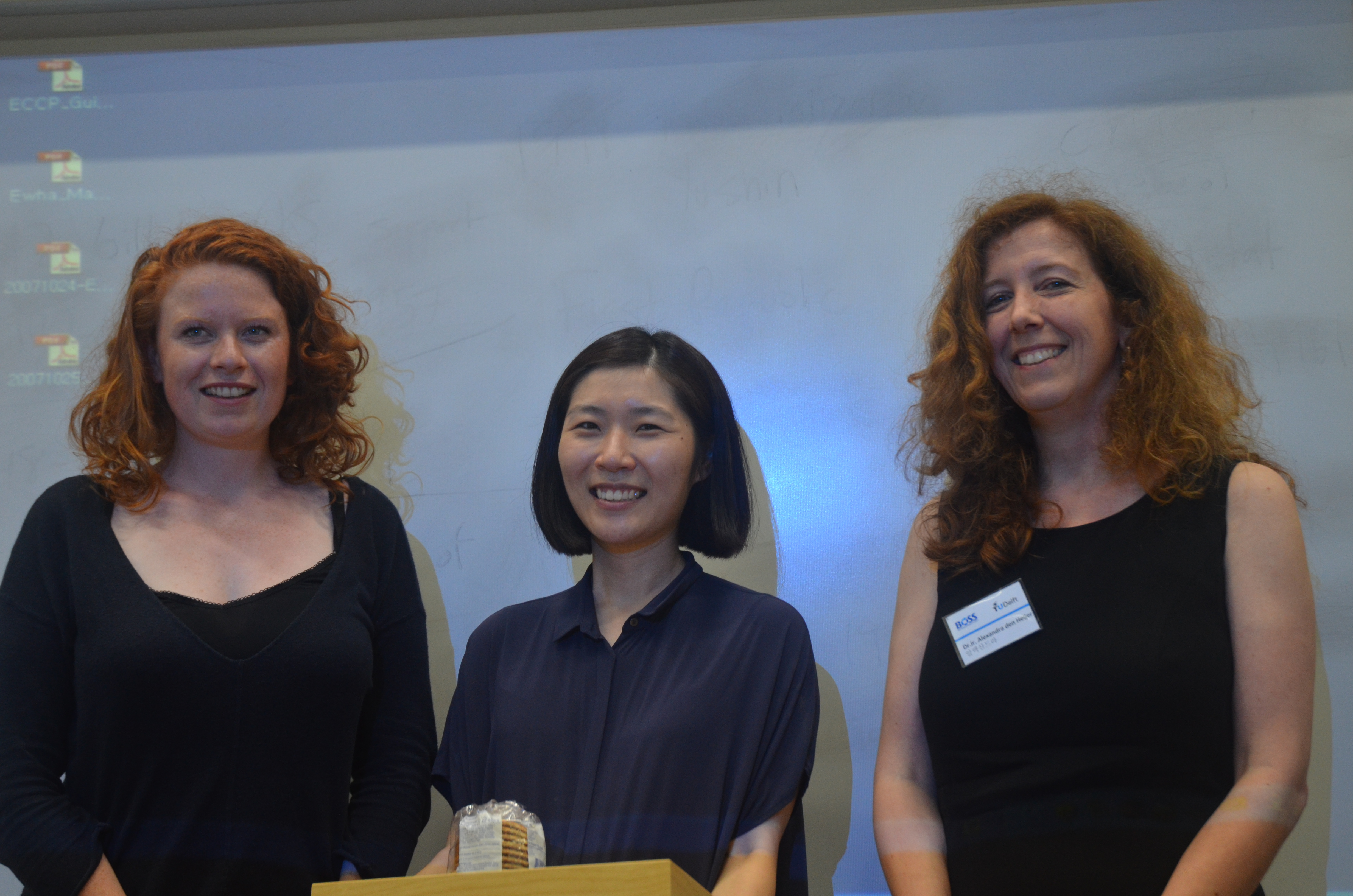
our student Dora Baalman, Ewha professor Judith Yoo Daun and me

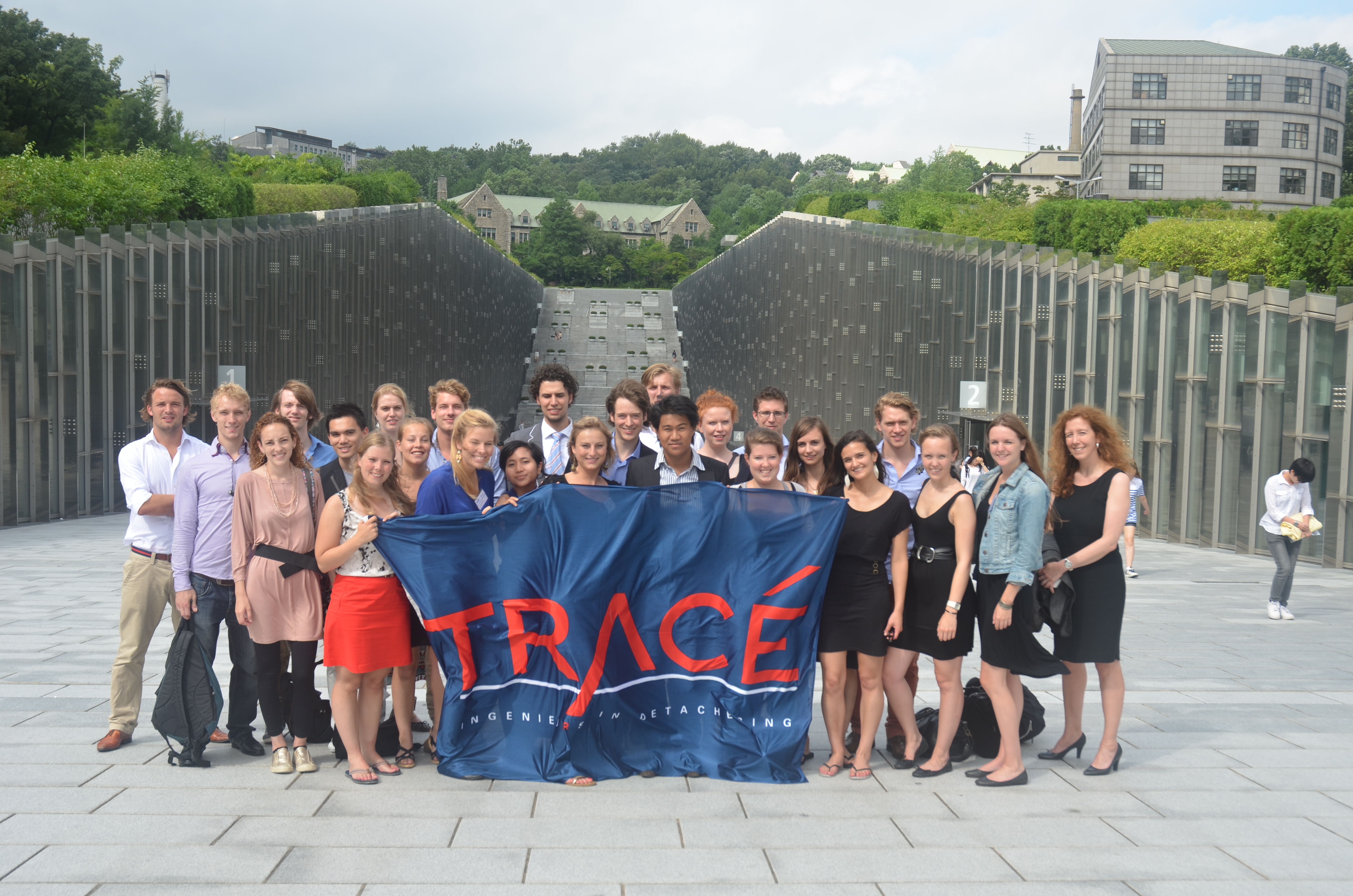
group photo at Ewha’s iconic ECC building

On Friday July 20 we visited Savills in the morning and SeoulTech in the afternoon. Savills presented us the facts & figures of the office market and retail market in Seoul. They took us to one of the newest office buildings in Seoul’s Central Business District – see group photo below.
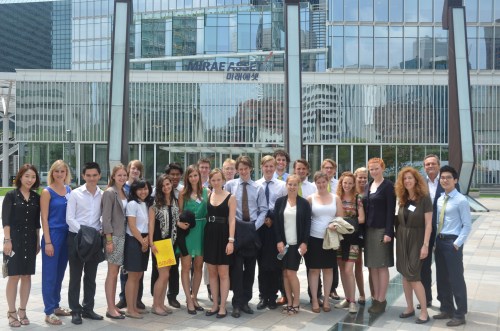
our complete group with Savills hosts, in front of a prime Seoul CBD office building (next to downtown stream / successful project Cheonggyecheon)

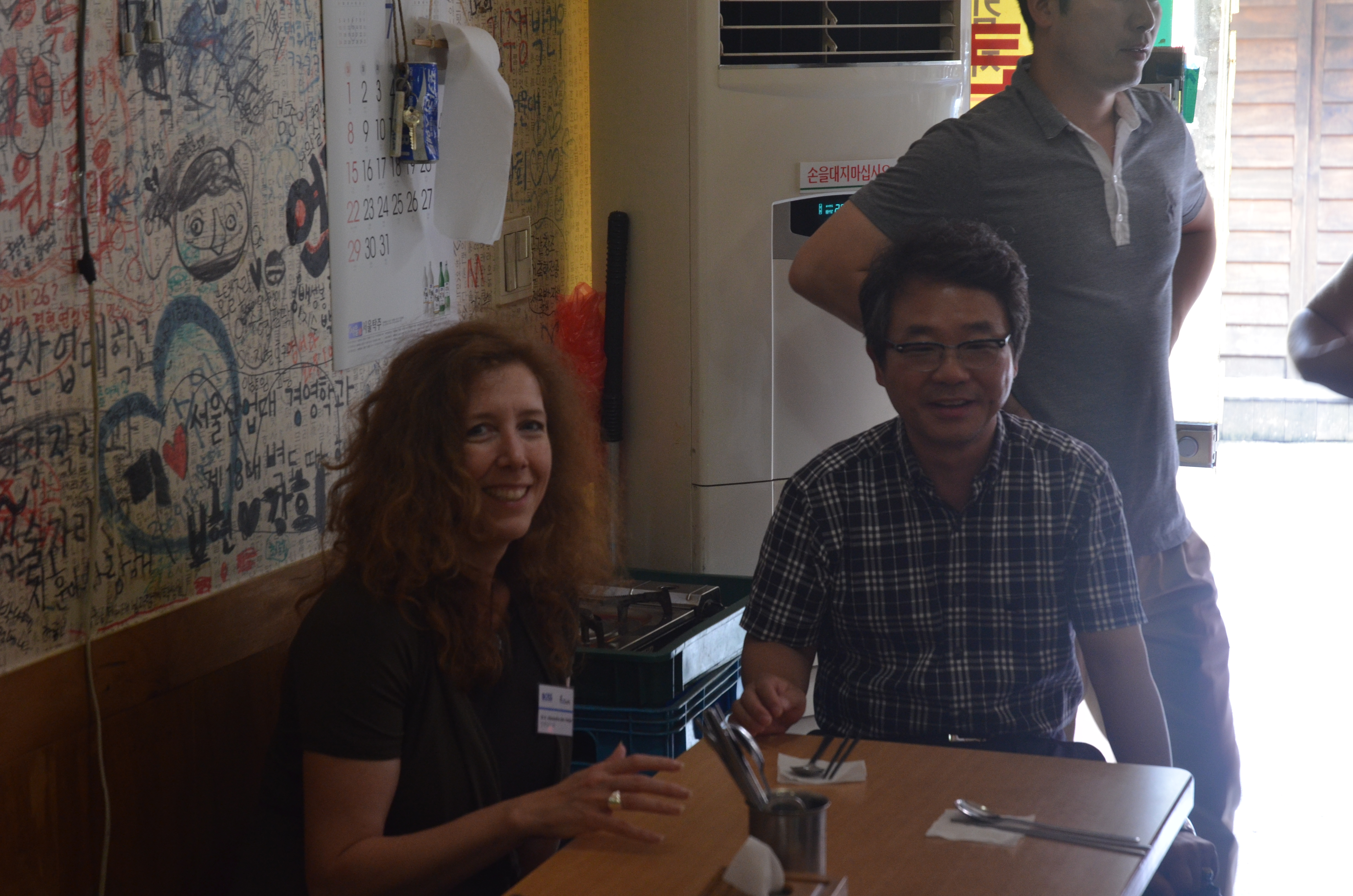
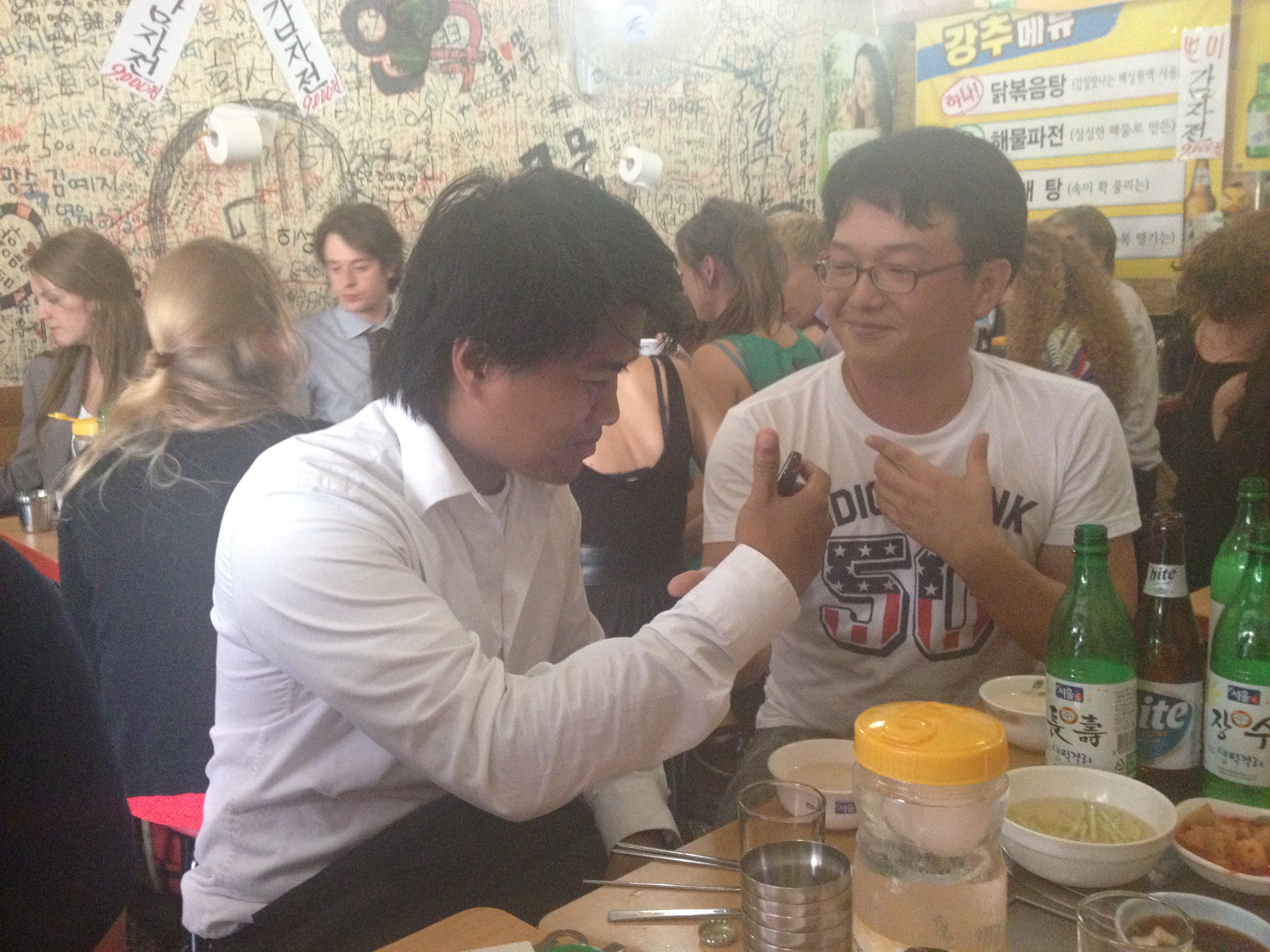
In the afternoon both professors and students enjoyed an academic visit to Seoul National University of Science and Technology – Seoultech (see website and Wikipedia). Our host professor Ock did not only lead the discussion about shared knowledge and research (Public Private Partnerships i n particular), but also offered our students “Friday afternoon drinks” in a very popular student bar. Both the academic connection and the social encounters were very much appreciated by (PhD) students and professors!
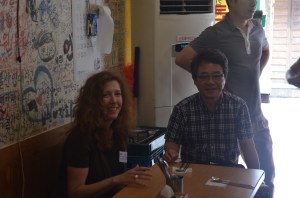
prof. Ock and me – after a fruitful academic discussion, at SeoulTech campus


enjoying “Friday afternoon drinks” near SeoulTech’s campus

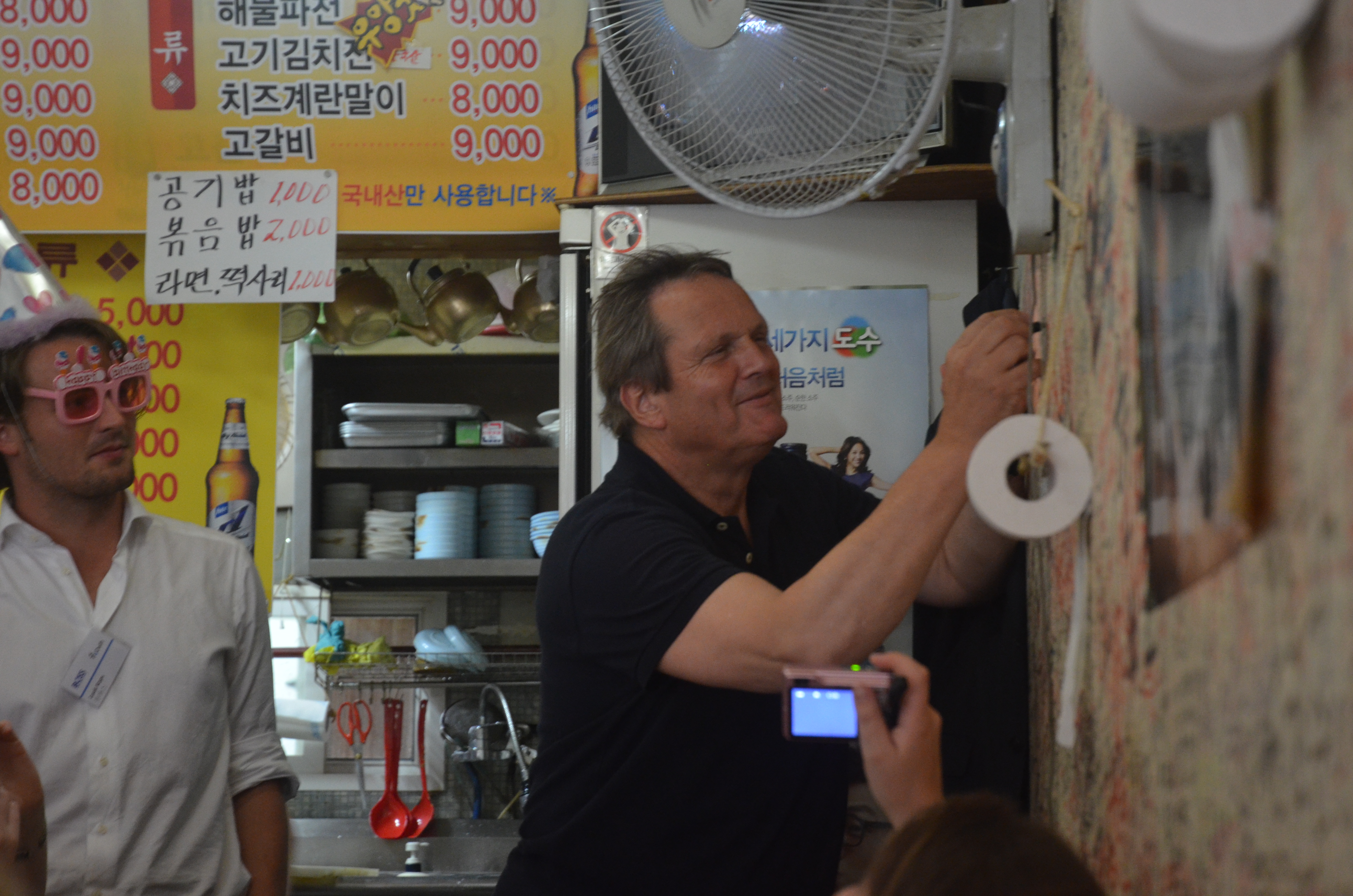
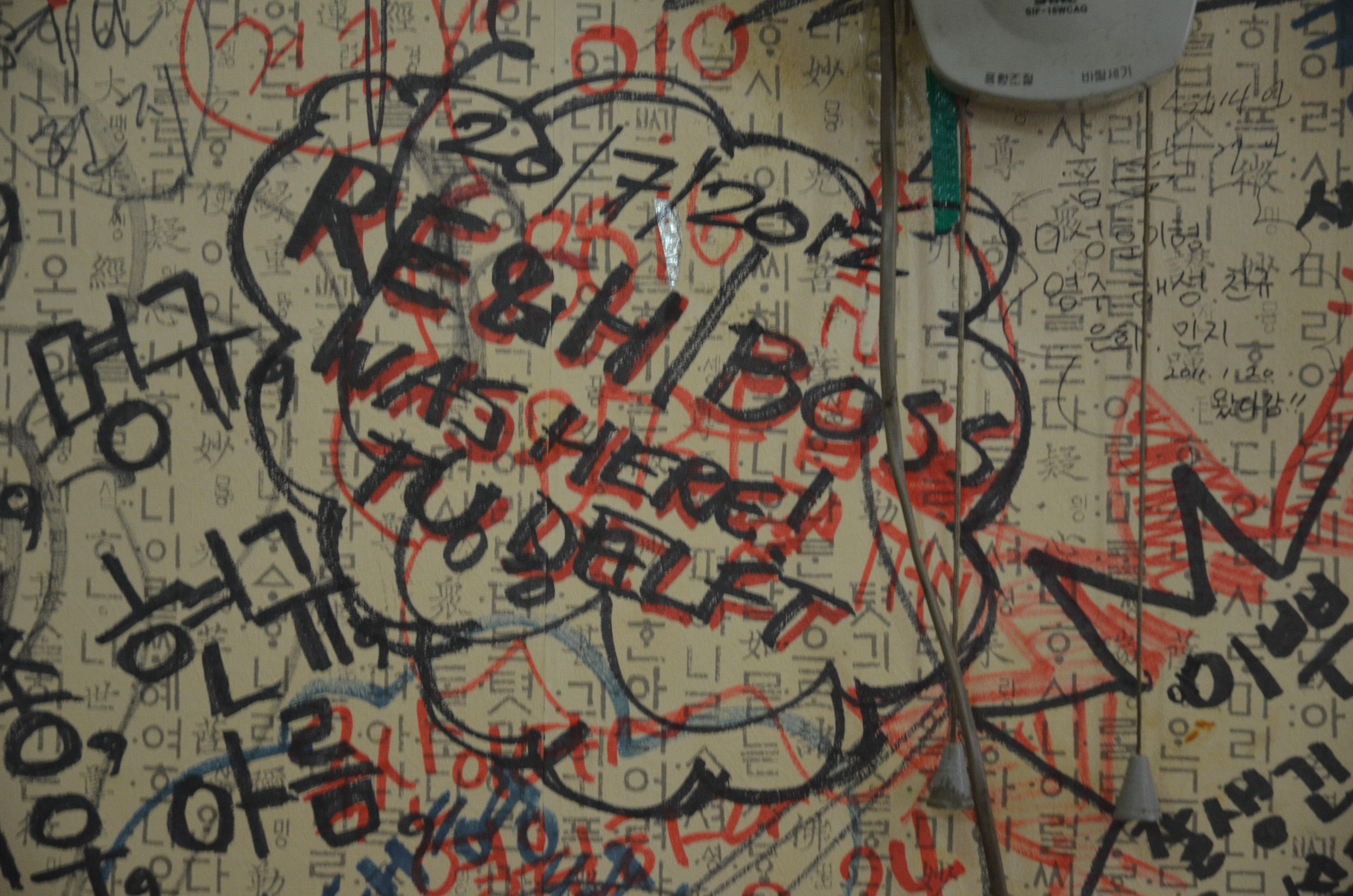
As a token of our appreciation – and according to local tradition – professor De Jonge signed ‘our name’ on the wall: “20/7/2012 – RE&H / BOSS was here – TU Delft” (see photos below). BOSS is the student association of Master track Real Estate & Housing (RE&H).

as a token of our appreciation – and according to local tradition – professor De Jonge signed ‘our name’ on the wall

“20/7/2012 – RE&H / BOSS was here – TU Delft” (RE&H is TU Delft Faculty of Architecture’s Master track Real Estate & Housing)

This was an excellent end of a busy week and successful student trip. On Saturday July 21 we took a DMZ tour to North Korea, which was very impressive. On Sunday our group split to various Asian countries – some stayed in South Korea and some returned to Netherlands. Professor Hans de Jonge and I want to thank everyone – including our group members and especially the BOSS organising committee – for their valuable contributions and we also look forward to the student report!

To be continued…

Leave a comment

Filed under education, international network

Back to South Korea, with students

by Alexandra den Heijer

Today I will return to South Korea with 24 students from our Delft University of Technology (TU Delft). Professor Hans de Jonge and I were asked to join the group of Architecture / Real Estate / Design & Construction Management students on their trip to Busan, Yeosu (Expo 2012) and Seoul. All students are members of BOSS – a student association related to our department of Real Estate & Housing.

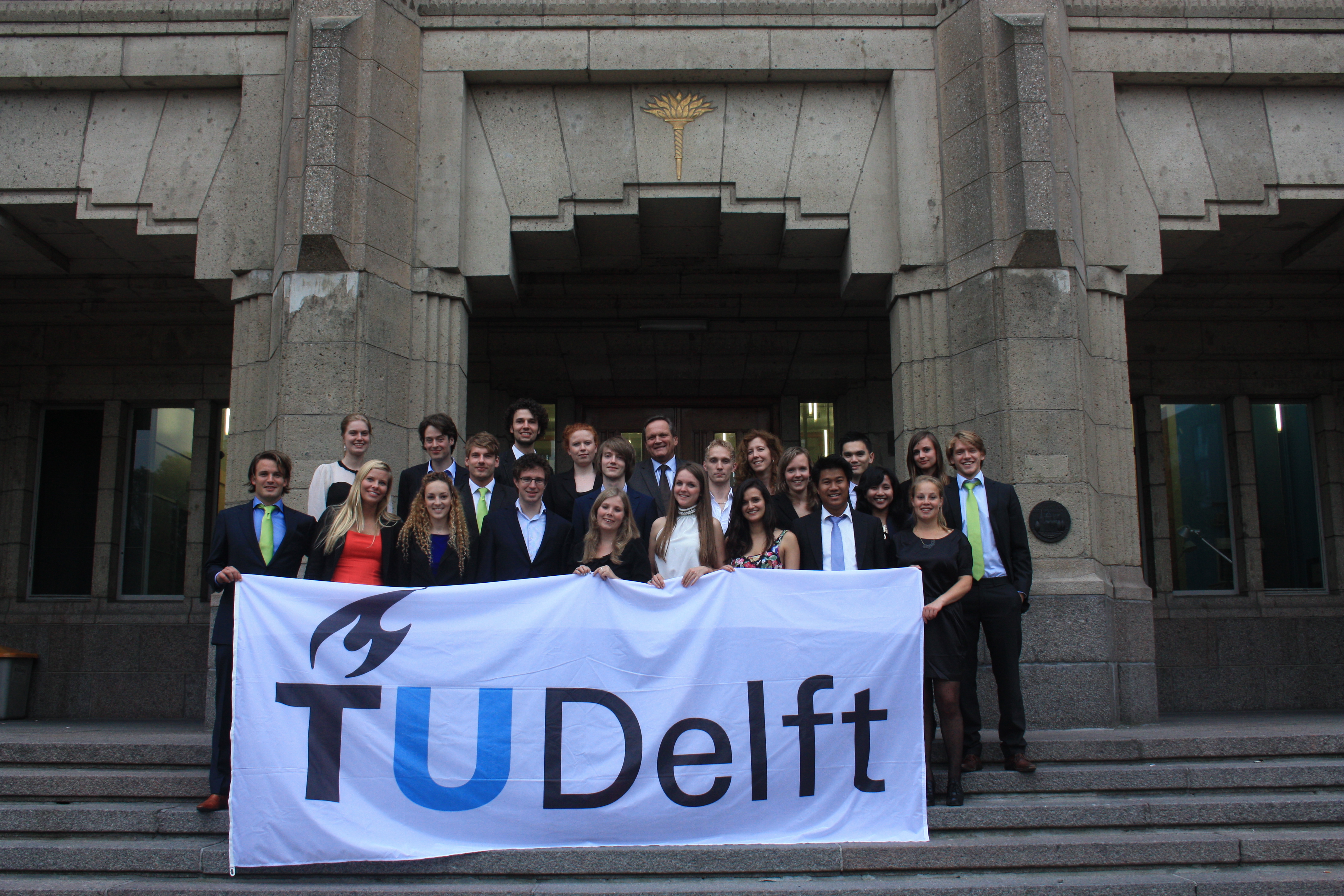
a group photo – a few days before our flights to South Korea – in front of our BK city building @TUDelft

It is purely coincidental: two visits to South Korea in the same month! At this moment – just before we leave – I am happy that I can share my experience, my Korean network and my enthusiasm about Seoul and South Korea with our students.

Leave a comment

Filed under education, international network

In South Korea for CELE 2012

by Alexandra den Heijer

Six months ago I got an invitation to speak at a OECD-CELE conference in Seoul (June 18-20, 2012). This week I feel blessed and honoured to be in Seoul for my lecture and for exchanging knowledge about the university campus. CELE 2012 is the 3rd conference in the series “Higher Education Space and Places: for learning, innovation and knowledge exchange”. CELE is the Centre for Effective Learning Environments. This year’s conference “Enhancing university competitiveness through educational facilities” is organised by OECD/CELE in co-operation with the Korean Educational Development Institute (EDUMAC – KEDI)*. The conference website: CELE 2012

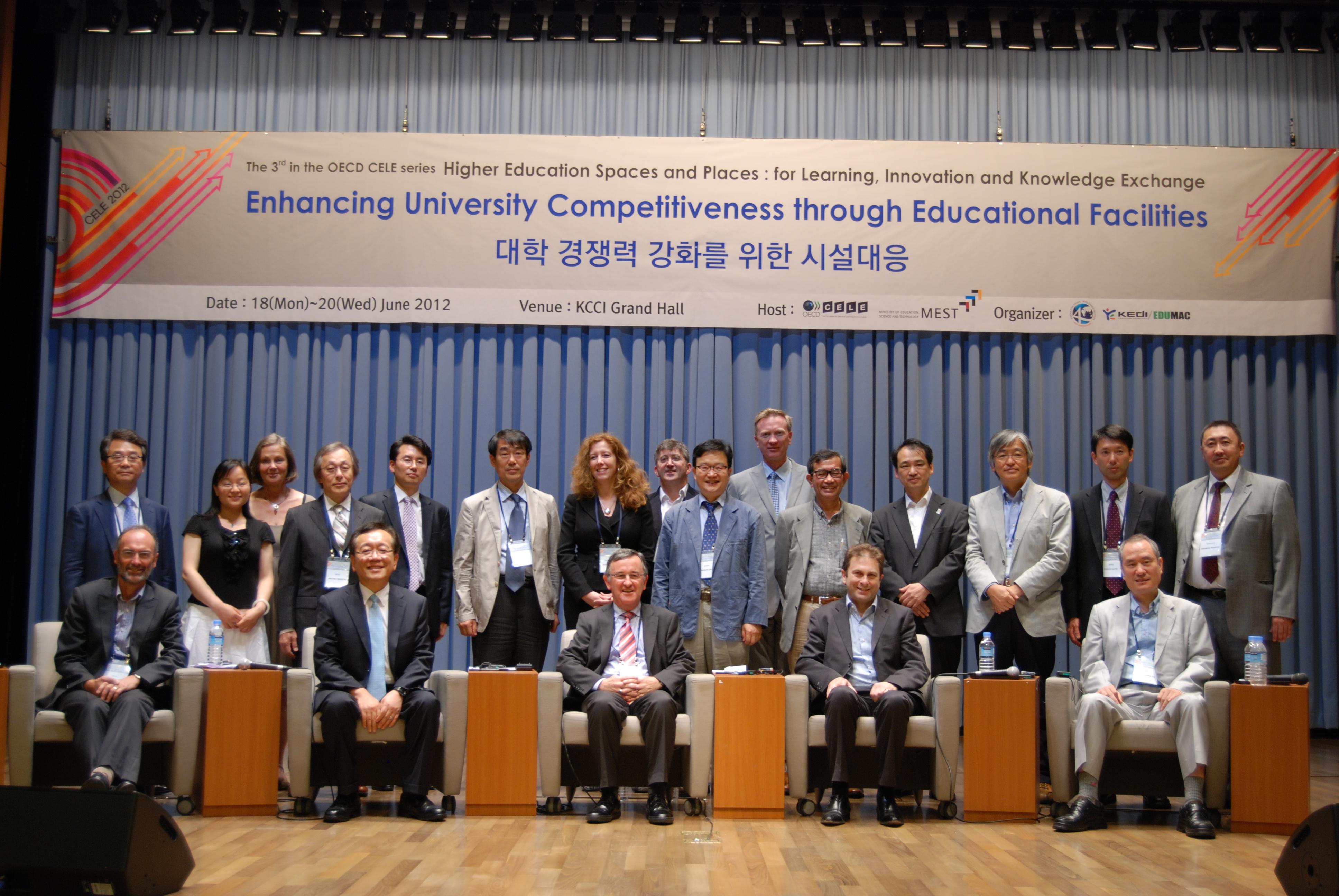
official photo of all speakers and hosts of CELE 2012 (source: MEST-KEDI-CELE)

The conference brings together those who lead, manage and design the world’s university facilities to address 4 themes: (I) Ensuring quality facilities; (II) Facility design and green campuses; (III) The role of public private partnerships; and (IV) Efficient facility management systems. My contribution is part of plenary session IV – the hand-out can be found under DOWNLOADS.

After one day I was already amazed by the similarities in approaches, even though representatives from 20 different countries are attending this conference, inclusing Indonesia, Mongolia, Singapore, Japan and China.

Lessons so far:
– (from various speakers) it surprised me that both South Korea and Japan are facing decreasing student numbers in the near future – due to demographic developments – their strategies to make better use of existing space and to share facilities are very similar to ours (Netherlands/Europe)
– (from Akademiska Hus, Sweden) – a 2011 questionnaire among more than 1000 students showed that there is a correlation between time spent on campus and student success – this also emphasizes the importance of “creating a home away from home for students” – Ingrid Gustavsson also pointed out the importance of non-academic functions to our (= North-West Europe) traditionally monofunctional campuses
– (from Institut Teknologi Bandung, Indonesia) – to highligh the university’s importance for the knowledge economy they made a knowledge development path, tracking how research and alumni influenced other developments – I also liked the fact that they are no longer building for faculties or divisions, but more for shared use
– (from Alastair Blyth, OECD-CELE) – the importance of social spaces was underlined again, with interesting examples of small buildings connecting (and bringing new life to) mono-functional buildings from the 60s and 70s
– the discussion (that followed) about distant learning and creating a social place to meet forms an interesting paradox – students should have a reason to go to campus, otherwise there will be no-one to socialize with

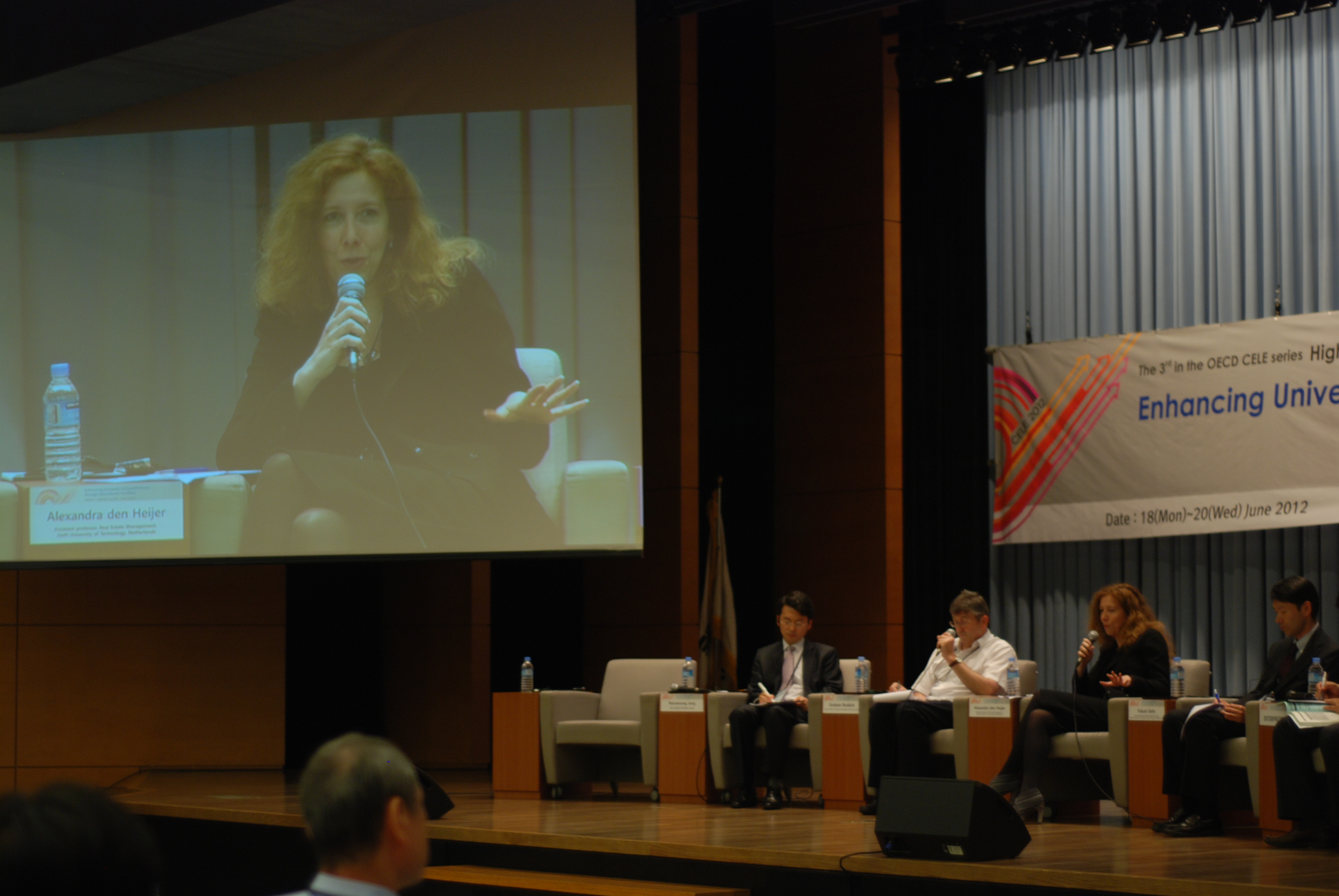
our plenary session IV – discussions about space charging, barriers for FM, the changing academic workplace, how to involve future users (instead of the current) and more… session IV featuring: Yeon Woong Jung (Korea), Fukuei Saito (Japan), Alexandra den Heijer (Netherlands) and Graham Roddick (Scotland)

– (from Graham Roddick, Scotland) – in the UK the concept public-private-partnership (PPP) is critically evaluated – PPP is suitable for residences (student housing) because that is a standardized product – for complex university buildings it is very different, also due to the uncertainties in demand
– (from Graham Roddick, Scotland) – the focus should shift from capital costs to life cycle costs (capital costs are only a small percentage – estimated 5-10% – of the life cycle costs)
– (from Richard Yelland, OECD-CELE) – ranking universities is a fact: there also is a U-multirank tool, which can rank universities depending on user criteria – see website for more info
– (from Jaepil Choi, Seoul National University, South Korea) – the quality of the facilities should be part of rankings; then universities will pay more attention and invest more – Graham Roddick notes that students can easily share their thought about the quality of facilities through social media like Facebook now…

… and the same goes for thoughts about conferences, like I do with this blog. I really enjoyed this conference and have a new network that I cherish. I compliment the South Korean organisation for their very efficient and effective work. I will spread the word…
For my presentation: see DOWNLOADS.

* EDUMAC is part of KEDI and is the Educational Facilities Research and Management Centre: see EDUMAC website.

20120620-165443.jpg

The photo above was taken at Ewha Womans University (building ECC). ECC’s Architect is Dominique Perrault (DPA). Since it was open for the students in 2008 it has received many awards. Personally I was struck by the scale of the public space, which even looks larger because of the slope at the end.

Leave a comment

Filed under international network

Managing the Spanish campus: “El campus del futuro es una ciudad”

by Alexandra den Heijer

Last week I joined the group of directors of estate (campus managers) of Dutch universities to Spain. Together we visited the campuses of 5 universities in and around Madrid and Toledo:

-1- University of Alcalá | Universidad de Alcalá (UAH)
-2- University UNED | Universidad Nacional de Educación a Distancia (UNED)
-3- Technical University of Madrid | Universidad Politécnica de Madrid (UPM)
-4- University Carlos III | Universidad Carlos III de Madrid (UC3M)
-5- University of Castilla-La Mancha | La Universidad de Castilla-La Mancha (UCLM)

Some of lessons and photos can be found below. The title of this post “El campus del futuro es una ciudad” is one of the proposition of my PhD thesis (see PROPOSITIONS). This proposition also applies to (my vision on) Spanish campus development.

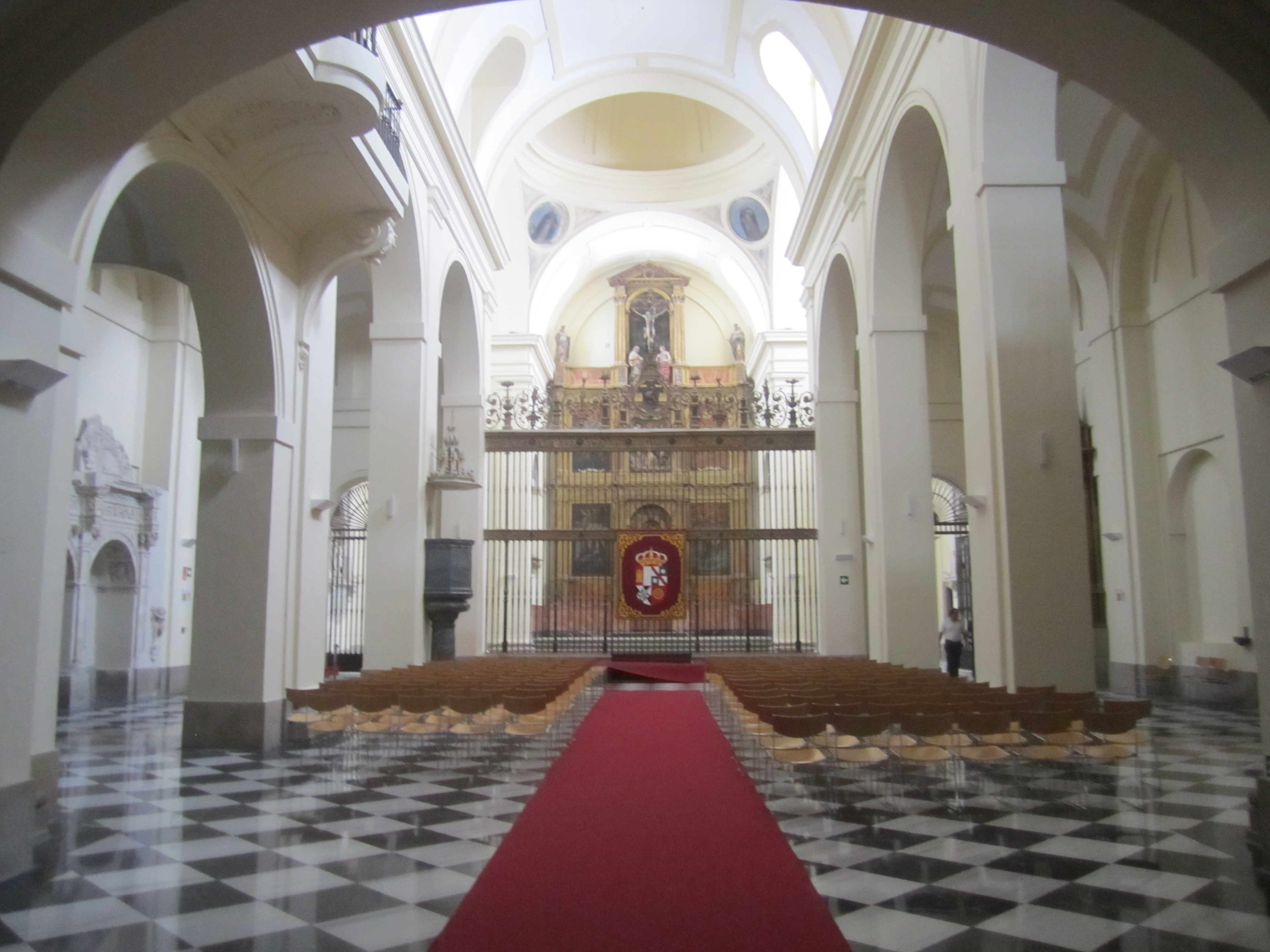
University of Castilla-La Mancha, San Pedro Martir building in Toledo

Last week University of Castilla-La Mancha also put a photo and notice of our visit on their website: Noticia UCLM.

P.S. This week I also received a link to a short film that summarized a conference in Barcelona about “Social Learning Spaces” – see post “Inspired in Spain”. The link to the film – on the website of University of Barcelona – can be found below.

Espacios sociales de aprendizaje | UBTV.

Leave a comment

Filed under international network

The changing academic office in Finland

by Alexandra den Heijer

Yesterday and today I gave lectures about the changing academic office, based on my research and our experiences in Delft with CASE BK CITY. The first lecture was for a KIINKO* group of government delegates, consultants and architects. The second lecture was for the University of Helsinki. In a lecture hall of their inner-city campus a mixed group of academics and facilities managers attended my lecture. Hand-outs of both presentations can be found under DOWNLOADS.

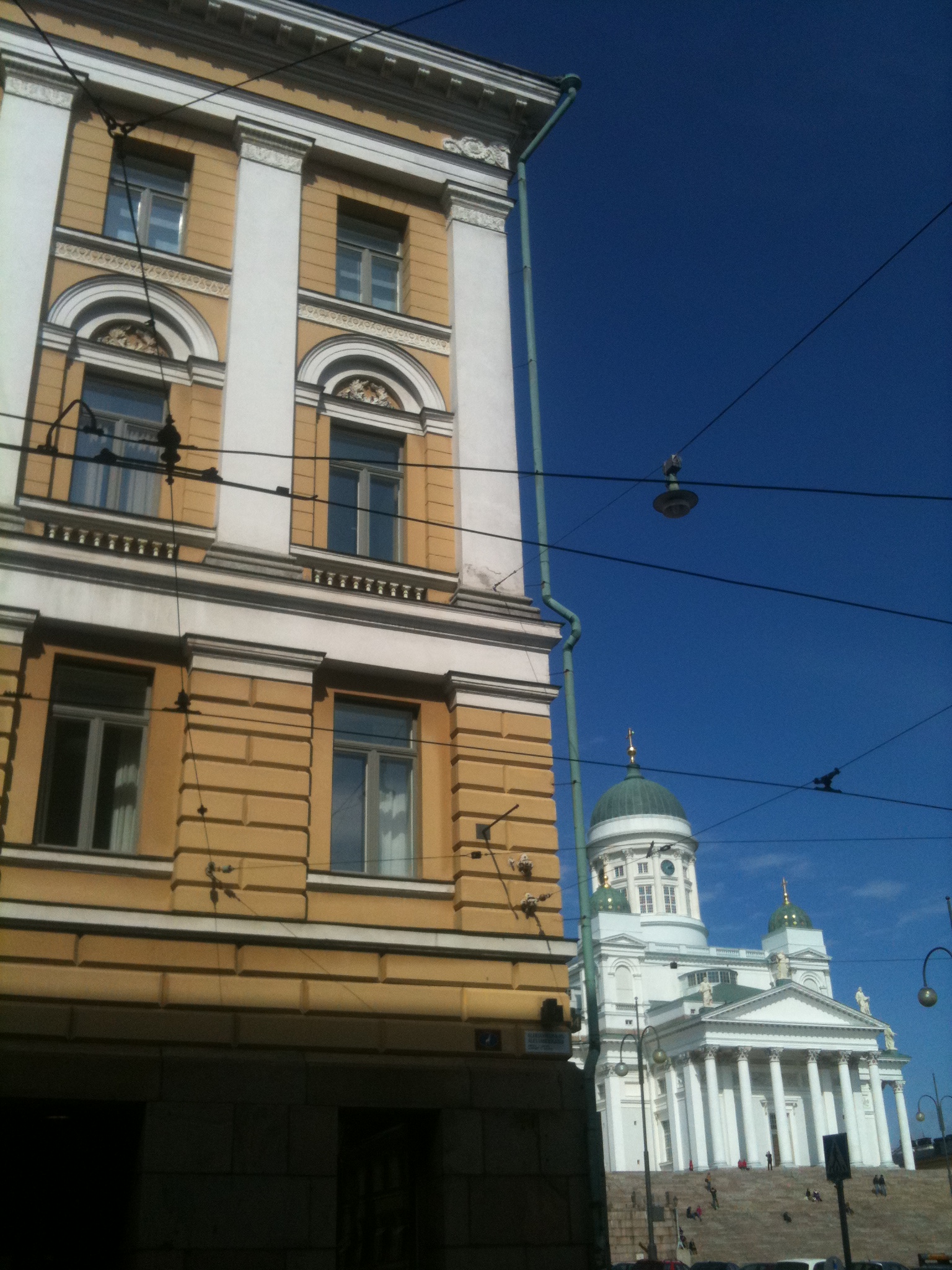
University of Helsinki's Main Building (city centre campus), with Helsinki Cathedral in the background

It was a nice surprise to meet members of the HUMANE network in the university’s Main Building. I did a workshop for their seminar in November 2011 – see post “European knowledge exchange in Brussels (and Delft)”. I want to thank my hosts Pirjo Honkaniemi (KIINKO) and Anna-Maija Lukkari (University of Helsinki) for their hospitality. Until my flight takes me back to Amsterdam, I will enjoy sunny Helsinki as a tourist.

* KIINKO Real Estate Education offers postgraduate education and training for asset, property and facilities management professionals in Finland – see www.kiinki.fi/in-english.

Leave a comment

Filed under international network

Film “Out of the Box”

by Alexandra den Heijer

At the AUDE conference in Loughborough last week, a 9-minute film “Out of the Box” was released, produced by the Higher Education Design Quality Forum (HEDQF): “A short film showcasing some European universities and how they are distinguishing themselves with radical architecture, design and branding. To achieve their ambition, many have reinvented the academic workplace.” (text from youtube.com)  The film by Rod McAllister and William Pine includes TU Delft’s case BK city and my ’15 seconds of fame’ … (starting at 2:30 with the sad memories of our unforgettable fire and continuing at 5:50 and 7:50)
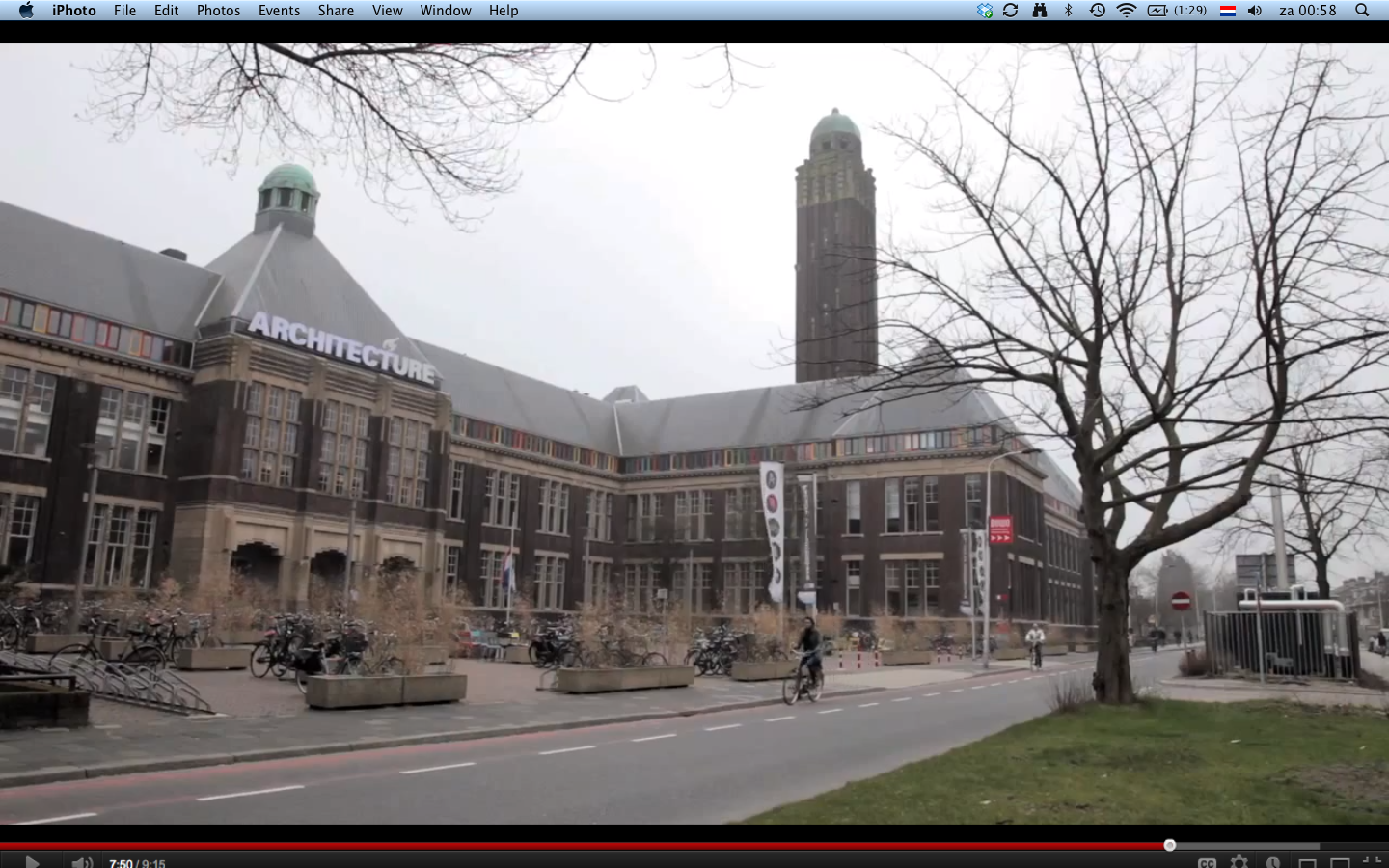
The film shows new academic places to work and learn (United Kingdom: University of Greenwich, Ravensbourne College, Lancaster Institute for the Contemporary Arts, Napier University Business School, Loughborough University, Finland: Aalto University, Netherlands: TU Delft, Faculty of Architecture / BK city). It also states that “The last year research has shown that 36% of British students rejected a university due to the quality of its estate”. Voice-over and producer Rod McAllister adds: “Perhaps we should give the box more credit…”. Rod McAllister works for architecture practice Sheppard Robson in London (www.sheppardrobson.com). More information about the activities of HEDQF (www.hedqf.com, which redirects to architecture.com). More about case BK city: CASE BK CITY.

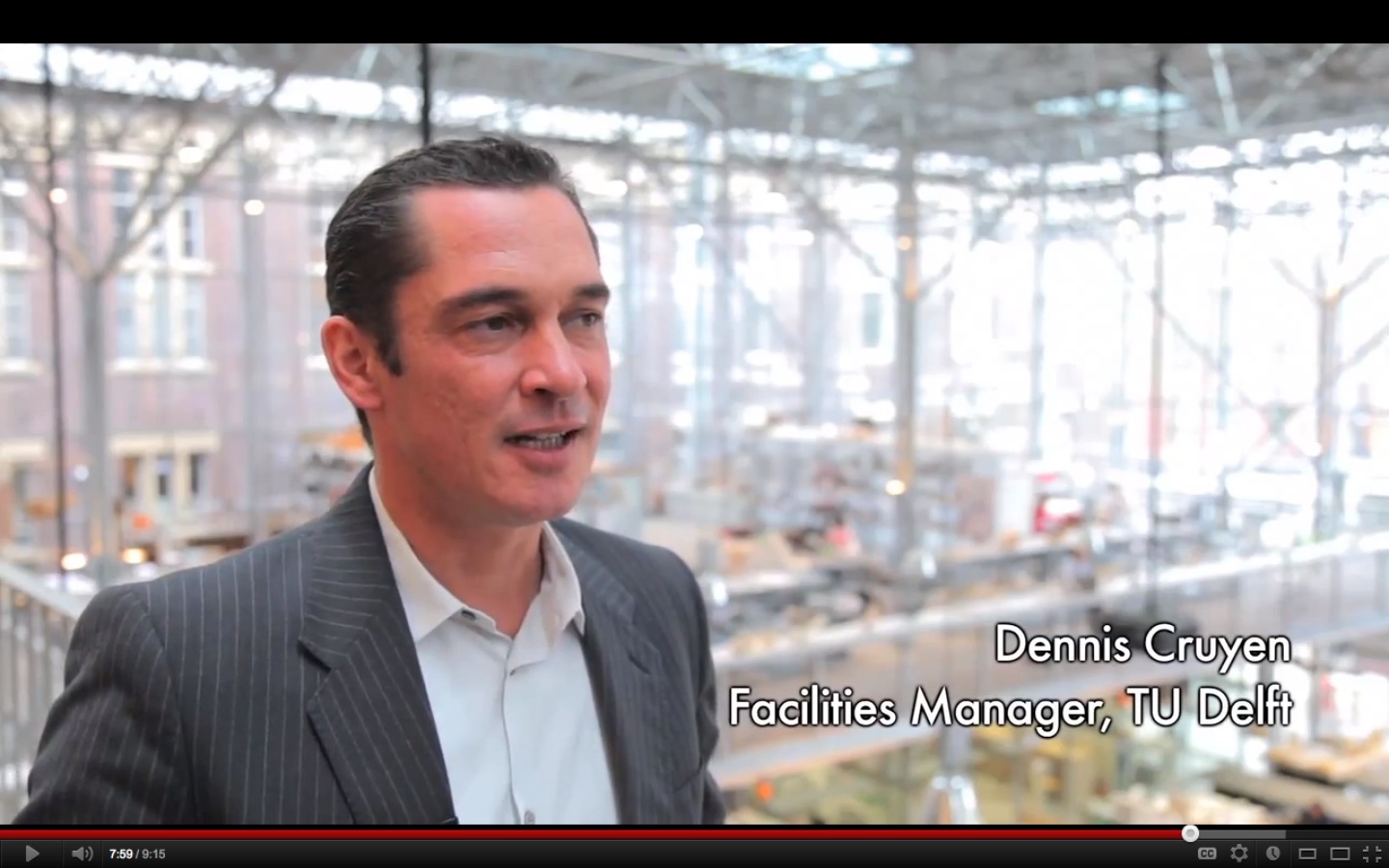
BK city's facility manager Dennis Cruyen

BK city - home of TU Delft's Faculty of Architecture

"my 15 seconds of fame" about BK city's brief and concepts

Leave a comment

Filed under international network, research