Category Archives: international network

In South Korea for CELE 2012

by Alexandra den Heijer

Six months ago I got an invitation to speak at a OECD-CELE conference in Seoul (June 18-20, 2012). This week I feel blessed and honoured to be in Seoul for my lecture and for exchanging knowledge about the university campus. CELE 2012 is the 3rd conference in the series “Higher Education Space and Places: for learning, innovation and knowledge exchange”. CELE is the Centre for Effective Learning Environments. This year’s conference “Enhancing university competitiveness through educational facilities” is organised by OECD/CELE in co-operation with the Korean Educational Development Institute (EDUMAC – KEDI)*. The conference website: CELE 2012
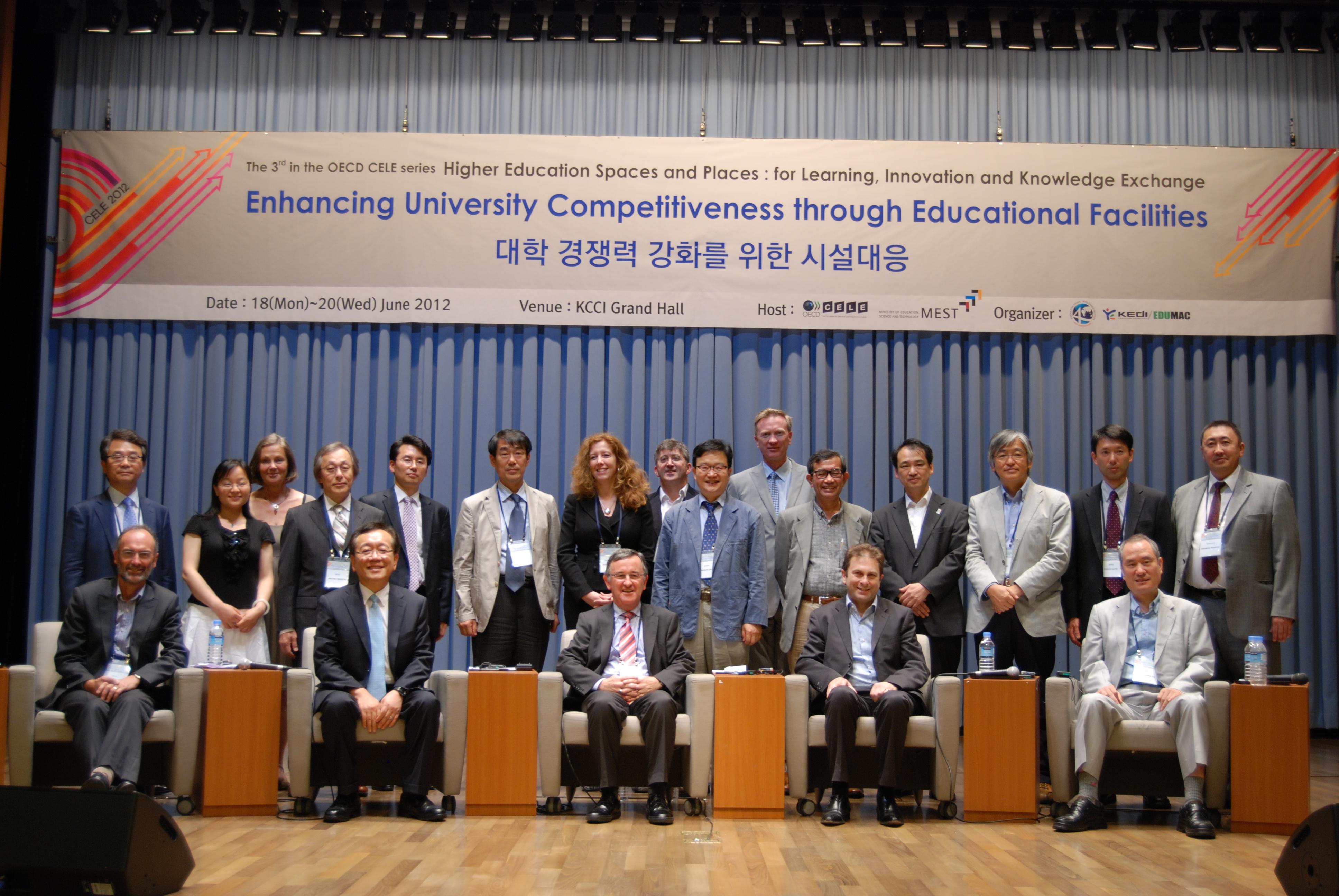
official photo of all speakers and hosts of CELE 2012 (source: MEST-KEDI-CELE)

The conference brings together those who lead, manage and design the world’s university facilities to address 4 themes: (I) Ensuring quality facilities; (II) Facility design and green campuses; (III) The role of public private partnerships; and (IV) Efficient facility management systems. My contribution is part of plenary session IV – the hand-out can be found under DOWNLOADS.

After one day I was already amazed by the similarities in approaches, even though representatives from 20 different countries are attending this conference, inclusing Indonesia, Mongolia, Singapore, Japan and China.

Lessons so far:
– (from various speakers) it surprised me that both South Korea and Japan are facing decreasing student numbers in the near future – due to demographic developments – their strategies to make better use of existing space and to share facilities are very similar to ours (Netherlands/Europe)
– (from Akademiska Hus, Sweden) – a 2011 questionnaire among more than 1000 students showed that there is a correlation between time spent on campus and student success – this also emphasizes the importance of “creating a home away from home for students” – Ingrid Gustavsson also pointed out the importance of non-academic functions to our (= North-West Europe) traditionally monofunctional campuses
– (from Institut Teknologi Bandung, Indonesia) – to highligh the university’s importance for the knowledge economy they made a knowledge development path, tracking how research and alumni influenced other developments – I also liked the fact that they are no longer building for faculties or divisions, but more for shared use
– (from Alastair Blyth, OECD-CELE) – the importance of social spaces was underlined again, with interesting examples of small buildings connecting (and bringing new life to) mono-functional buildings from the 60s and 70s
– the discussion (that followed) about distant learning and creating a social place to meet forms an interesting paradox – students should have a reason to go to campus, otherwise there will be no-one to socialize with
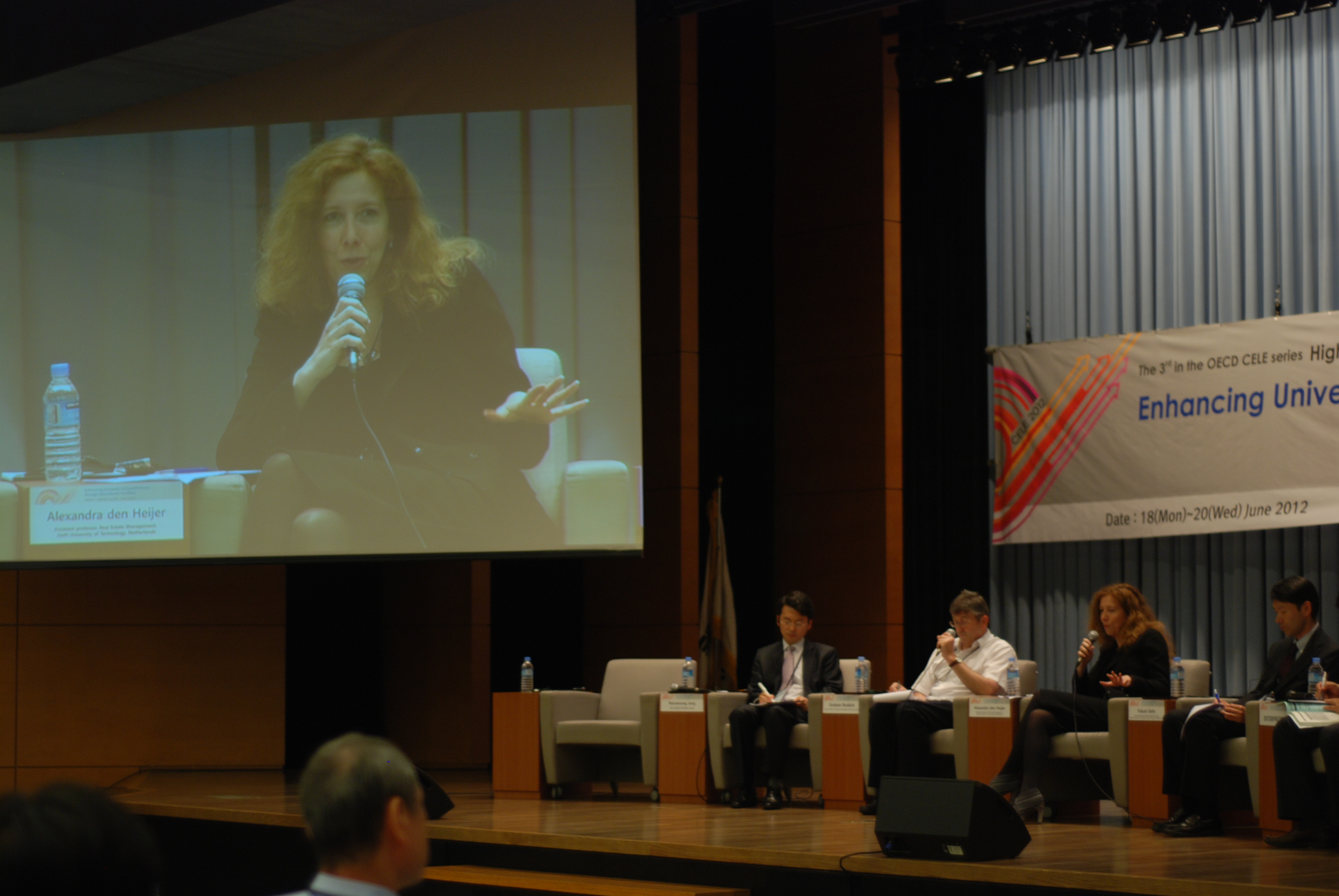
our plenary session IV – discussions about space charging, barriers for FM, the changing academic workplace, how to involve future users (instead of the current) and more… session IV featuring: Yeon Woong Jung (Korea), Fukuei Saito (Japan), Alexandra den Heijer (Netherlands) and Graham Roddick (Scotland)

– (from Graham Roddick, Scotland) – in the UK the concept public-private-partnership (PPP) is critically evaluated – PPP is suitable for residences (student housing) because that is a standardized product – for complex university buildings it is very different, also due to the uncertainties in demand
– (from Graham Roddick, Scotland) – the focus should shift from capital costs to life cycle costs (capital costs are only a small percentage – estimated 5-10% – of the life cycle costs)
– (from Richard Yelland, OECD-CELE) – ranking universities is a fact: there also is a U-multirank tool, which can rank universities depending on user criteria – see website for more info
– (from Jaepil Choi, Seoul National University, South Korea) – the quality of the facilities should be part of rankings; then universities will pay more attention and invest more – Graham Roddick notes that students can easily share their thought about the quality of facilities through social media like Facebook now…

… and the same goes for thoughts about conferences, like I do with this blog. I really enjoyed this conference and have a new network that I cherish. I compliment the South Korean organisation for their very efficient and effective work. I will spread the word…

For my presentation: see DOWNLOADS.

* EDUMAC is part of KEDI and is the Educational Facilities Research and Management Centre: see EDUMAC website.

20120620-165443.jpg

The photo above was taken at Ewha Womans University (building ECC). ECC’s Architect is Dominique Perrault (DPA). Since it was open for the students in 2008 it has received many awards. Personally I was struck by the scale of the public space, which even looks larger because of the slope at the end.
Leave a comment

Filed under international network

Managing the Spanish campus: “El campus del futuro es una ciudad”

by Alexandra den Heijer

Last week I joined the group of directors of estate (campus managers) of Dutch universities to Spain. Together we visited the campuses of 5 universities in and around Madrid and Toledo:

-1- University of Alcalá | Universidad de Alcalá (UAH)
-2- University UNED | Universidad Nacional de Educación a Distancia (UNED)
-3- Technical University of Madrid | Universidad Politécnica de Madrid (UPM)
-4- University Carlos III | Universidad Carlos III de Madrid (UC3M)
-5- University of Castilla-La Mancha | La Universidad de Castilla-La Mancha (UCLM)

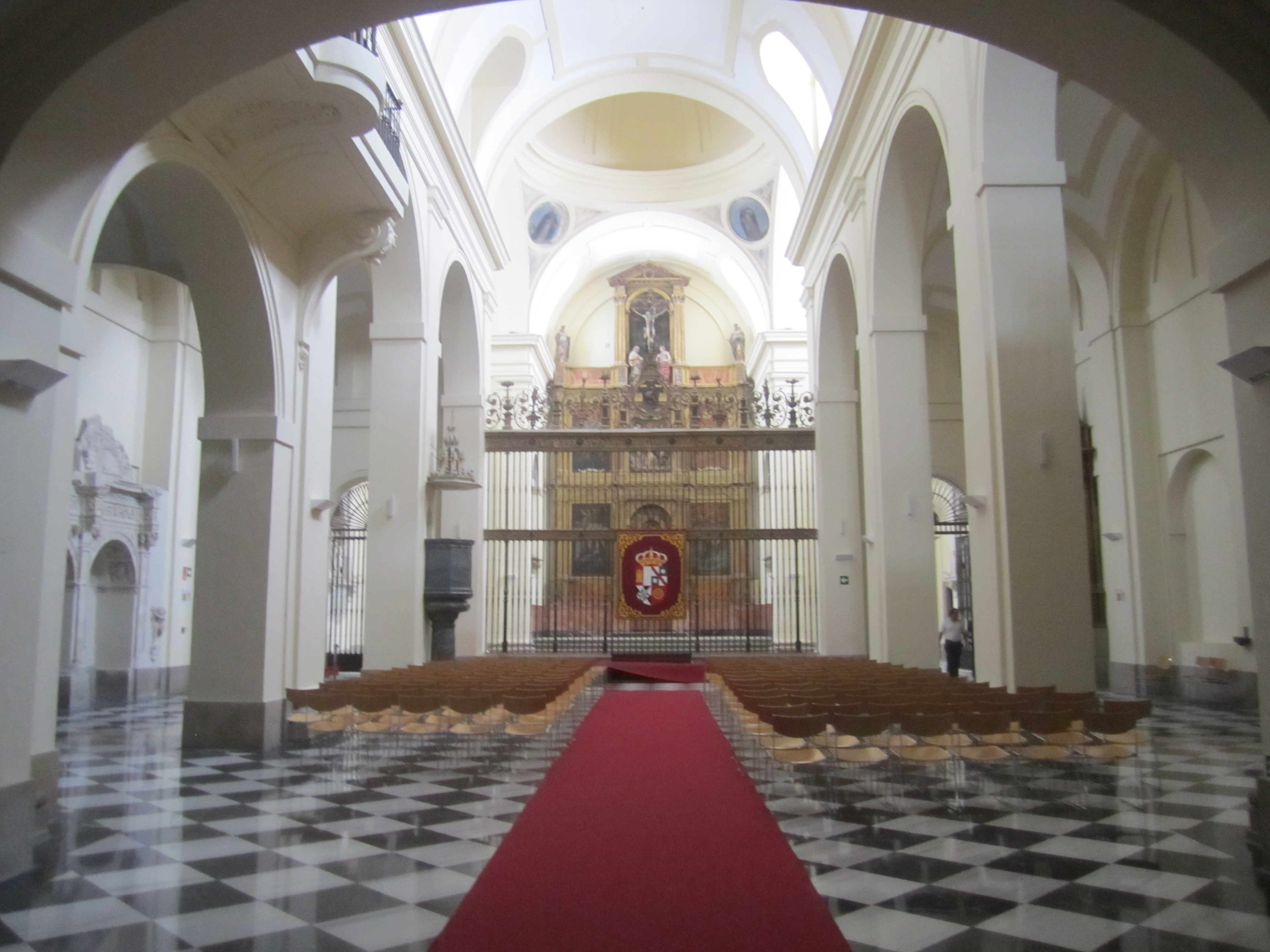
Some of lessons and photos can be found below. The title of this post “El campus del futuro es una ciudad” is one of the proposition of my PhD thesis (see PROPOSITIONS). This proposition also applies to (my vision on) Spanish campus development.

University of Castilla-La Mancha, San Pedro Martir building in Toledo

Last week University of Castilla-La Mancha also put a photo and notice of our visit on their website: Noticia UCLM.

P.S. This week I also received a link to a short film that summarized a conference in Barcelona about “Social Learning Spaces” – see post “Inspired in Spain”. The link to the film – on the website of University of Barcelona – can be found below.

Espacios sociales de aprendizaje | UBTV.

Leave a comment

Filed under international network

The changing academic office in Finland

by Alexandra den Heijer

Yesterday and today I gave lectures about the changing academic office, based on my research and our experiences in Delft with CASE BK CITY. The first lecture was for a KIINKO* group of government delegates, consultants and architects. The second lecture was for the University of Helsinki. In a lecture hall of their inner-city campus a mixed group of academics and facilities managers attended my lecture. Hand-outs of both presentations can be found under DOWNLOADS.

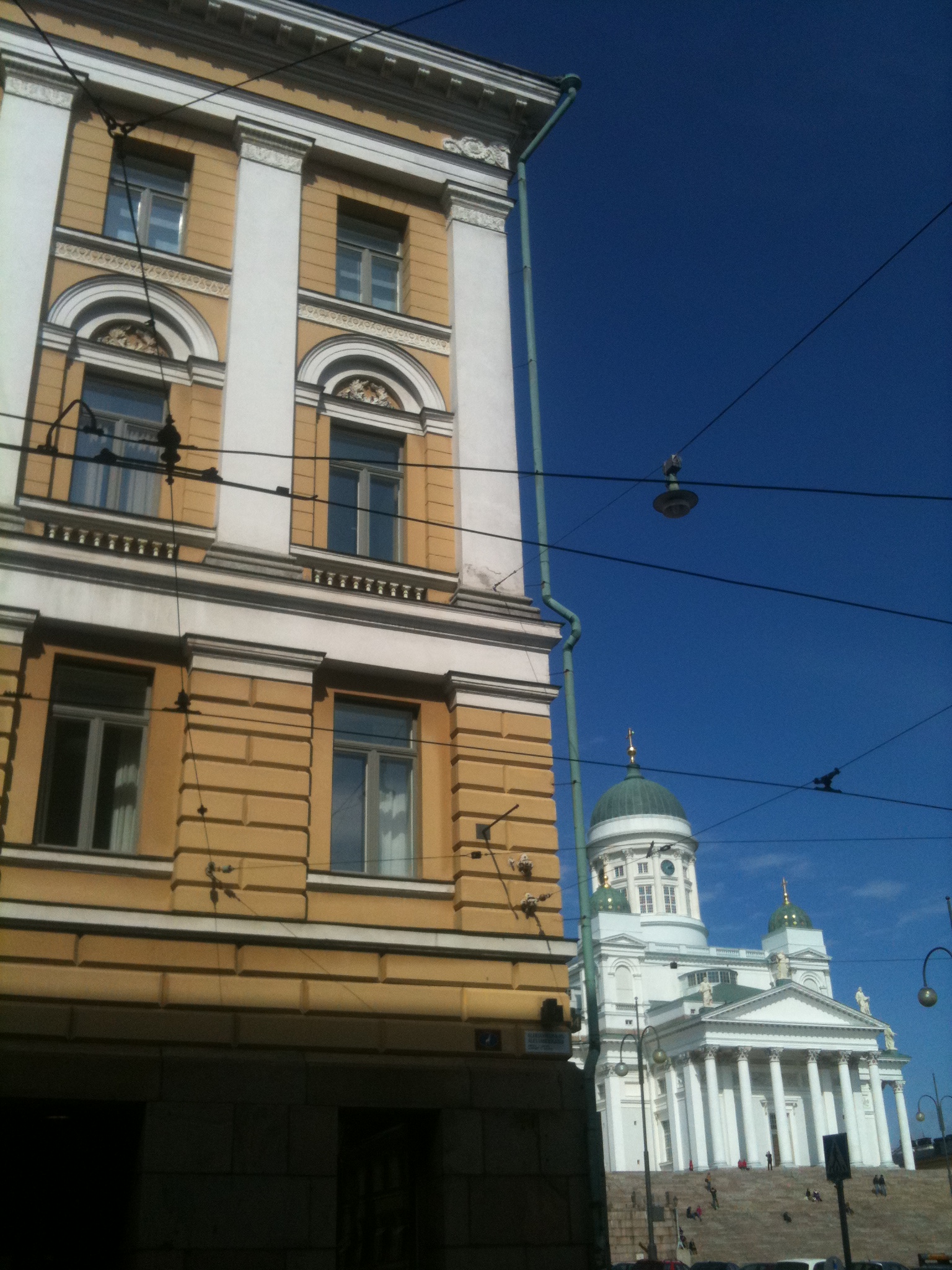
University of Helsinki's Main Building (city centre campus), with Helsinki Cathedral in the background

It was a nice surprise to meet members of the HUMANE network in the university’s Main Building. I did a workshop for their seminar in November 2011 – see post “European knowledge exchange in Brussels (and Delft)”. I want to thank my hosts Pirjo Honkaniemi (KIINKO) and Anna-Maija Lukkari (University of Helsinki) for their hospitality. Until my flight takes me back to Amsterdam, I will enjoy sunny Helsinki as a tourist.

* KIINKO Real Estate Education offers postgraduate education and training for asset, property and facilities management professionals in Finland – see www.kiinki.fi/in-english.

Leave a comment

Filed under international network

Film “Out of the Box”

by Alexandra den Heijer

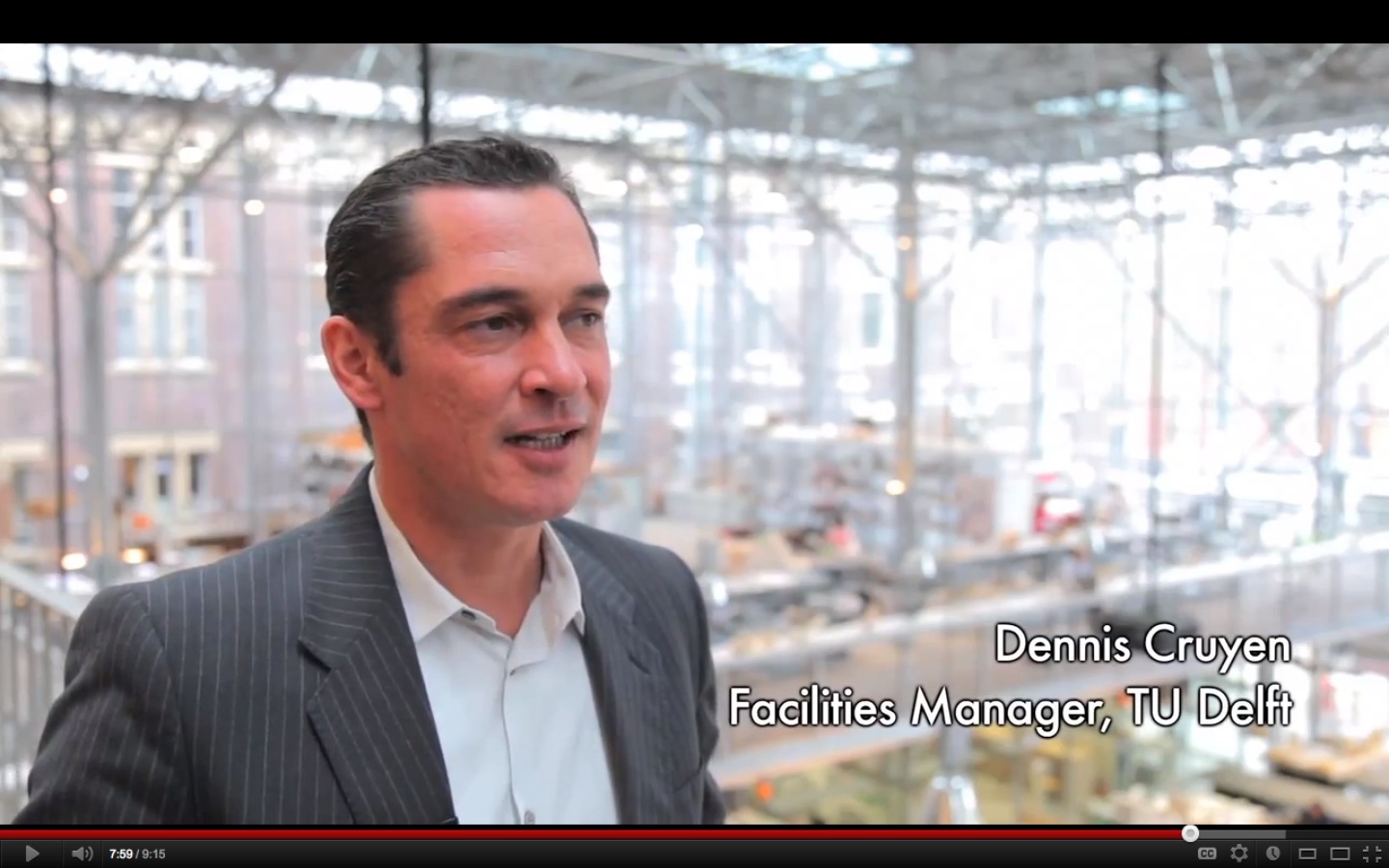
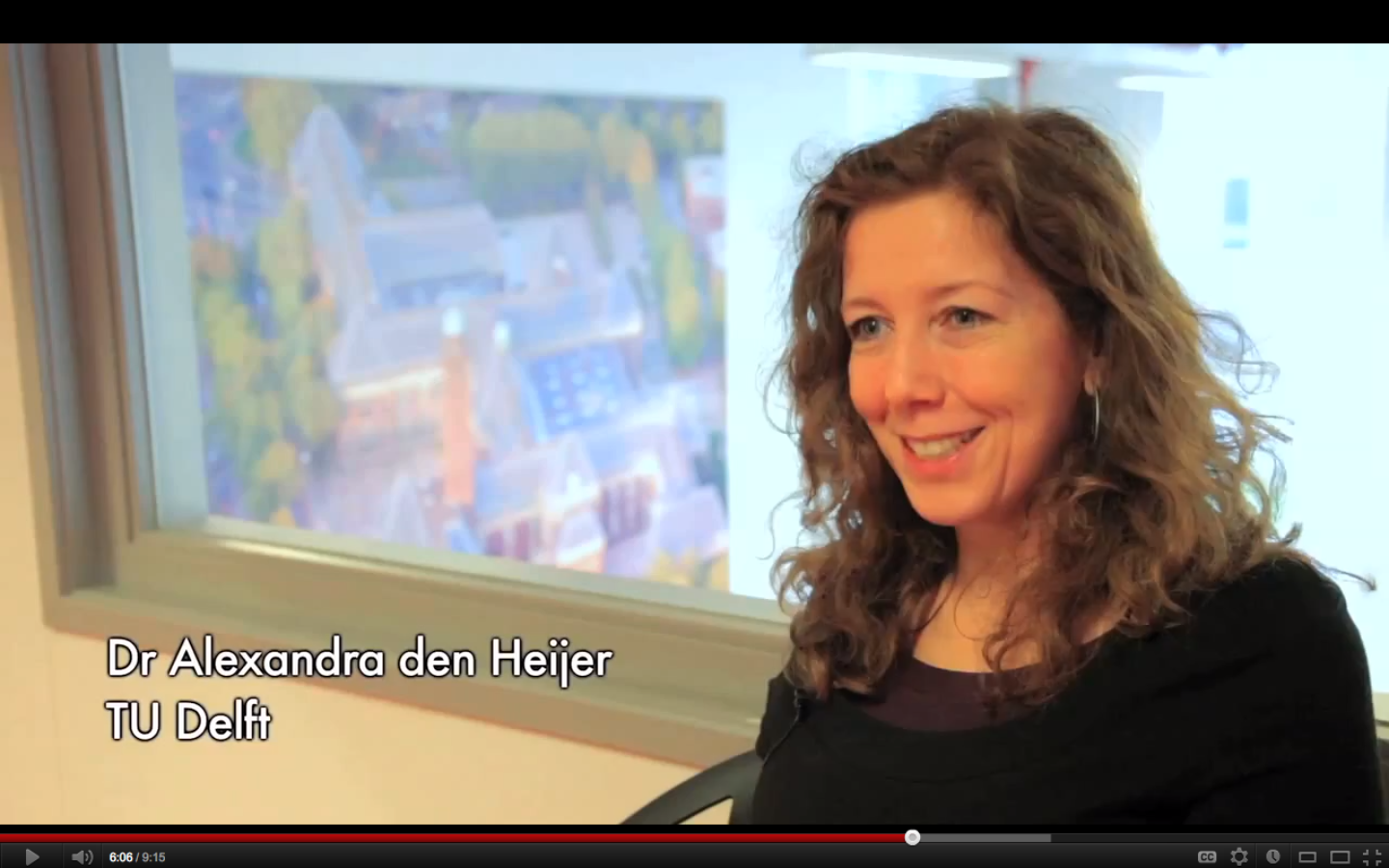
At the AUDE conference in Loughborough last week, a 9-minute film “Out of the Box” was released, produced by the Higher Education Design Quality Forum (HEDQF): “A short film showcasing some European universities and how they are distinguishing themselves with radical architecture, design and branding. To achieve their ambition, many have reinvented the academic workplace.” (text from youtube.com)  The film by Rod McAllister and William Pine includes TU Delft’s case BK city and my ’15 seconds of fame’ … (starting at 2:30 with the sad memories of our unforgettable fire and continuing at 5:50 and 7:50)

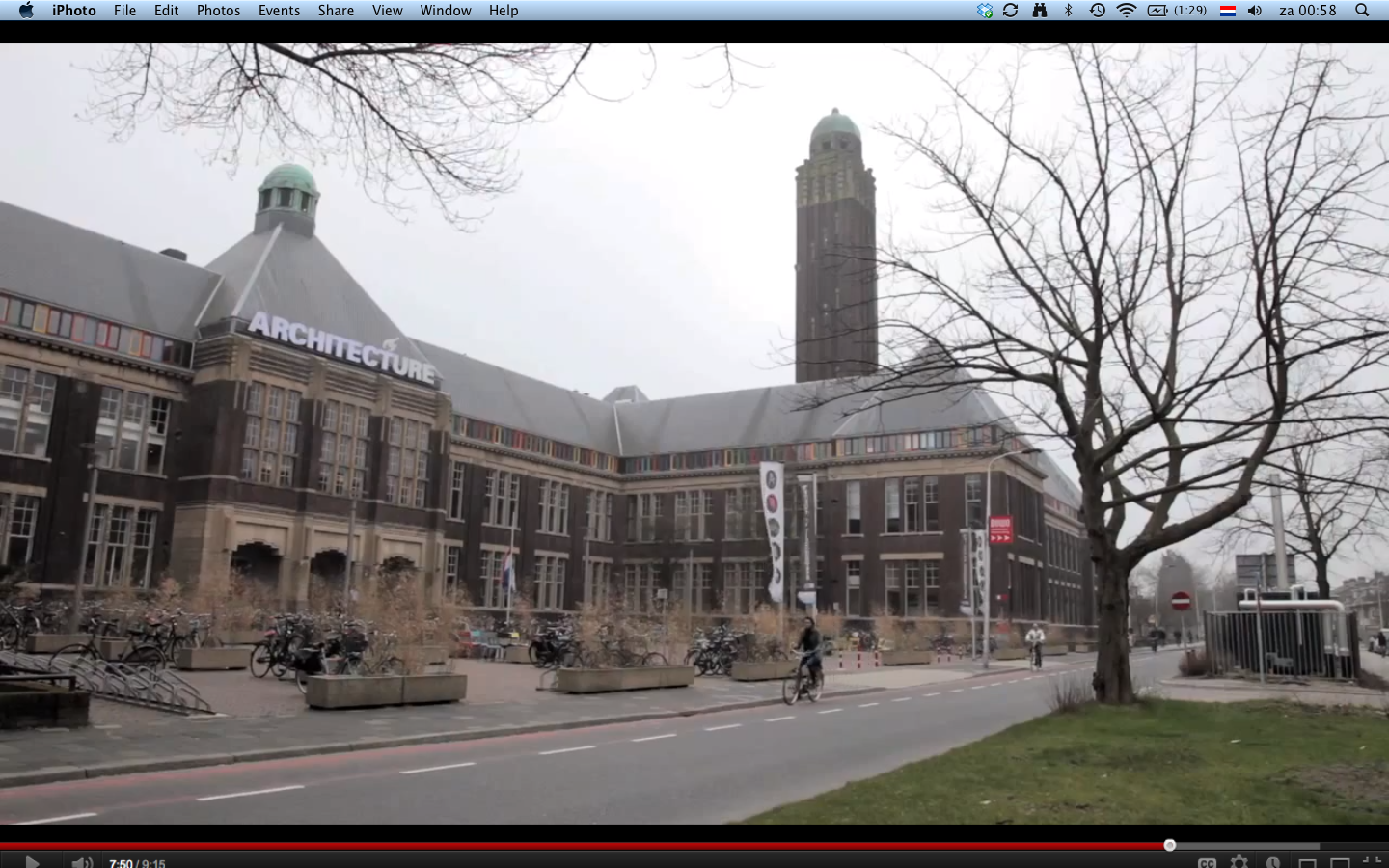
The film shows new academic places to work and learn (United Kingdom: University of Greenwich, Ravensbourne College, Lancaster Institute for the Contemporary Arts, Napier University Business School, Loughborough University, Finland: Aalto University, Netherlands: TU Delft, Faculty of Architecture / BK city). It also states that “The last year research has shown that 36% of British students rejected a university due to the quality of its estate”. Voice-over and producer Rod McAllister adds: “Perhaps we should give the box more credit…”. Rod McAllister works for architecture practice Sheppard Robson in London (www.sheppardrobson.com). More information about the activities of HEDQF (www.hedqf.com, which redirects to architecture.com). More about case BK city: CASE BK CITY.

BK city's facility manager Dennis Cruyen

BK city - home of TU Delft's Faculty of Architecture

"my 15 seconds of fame" about BK city's brief and concepts

Leave a comment

Filed under international network, research

“Leading the way” AUDE conference 2012

by Alexandra den Heijer

On April 2, 2012 I was invited to speak at Loughborough University for the AUDE conference (the UK Association of University Directors of Estates). The hand-out of the presentation can be found under DOWNLOADS after my presentation. The 3-minute movie “The making of BK city” can be found with a link to YouTube under CASE BK CITY.

European Univer-cities in the top 150 worldwide - figure from Flavia Curvelo Magdaniel's research

Lessons so far:
-1- the importance of ‘managing expectations’ – engaging both students and staff in the strategic, financial and physical context (and challenges) to put their functional demands into perspective, which also is a key factor in their satisfaction;
-2- the relation between the physical campus and regional knowledge economy (‘town gown’ – univer-city) – see figure Knowledge cities in Europe, representing universities in the global top 150, source QS Times Higher Education ranking 2011, edited by PhD researcher Flavia Curvelo Magdaniel, see BOOK DESIGN for her background and résumé;
-3- balancing the strategy of ‘creating a community and home base’ and sharing space and collaborating with partners in higher education, business or industry;
-4- considering students as long-term stakeholders and not as customers; when students become alumni the value of their diploma will be associated with the quality of the institution for life and alumni could (and do) also play an important role in education and research, in the primary processes (giving lectures) and in branding their ‘alma mater’ in practice. This could be a basis for alumni funding.

Leave a comment

Filed under international network, research

EUA conference “Sustainable Universities”

by Alexandra den Heijer

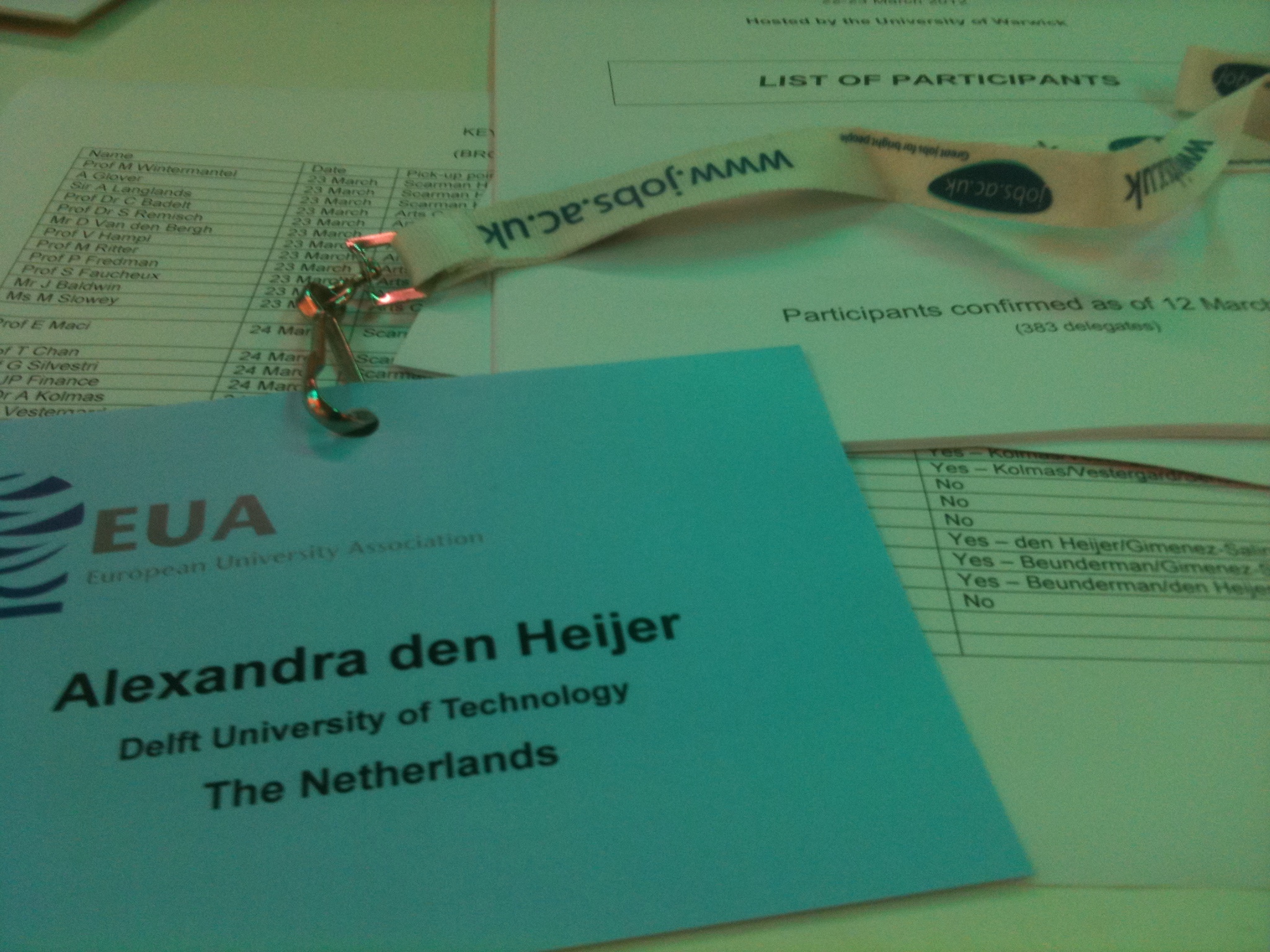
I really enjoyed the annual EUA conference, hosted by the University of Warwick. I will write more about the content later. My contribution (presentation about innovative campus management) can be found under DOWNLOADS – including a link to my propositions in English, German, French, Spanish and -of course- Dutch: 10 PROPOSITIONS .

20120323-191208.jpg

Leave a comment

Filed under international network, Uncategorized

German group in Groningen

by Alexandra den Heijer

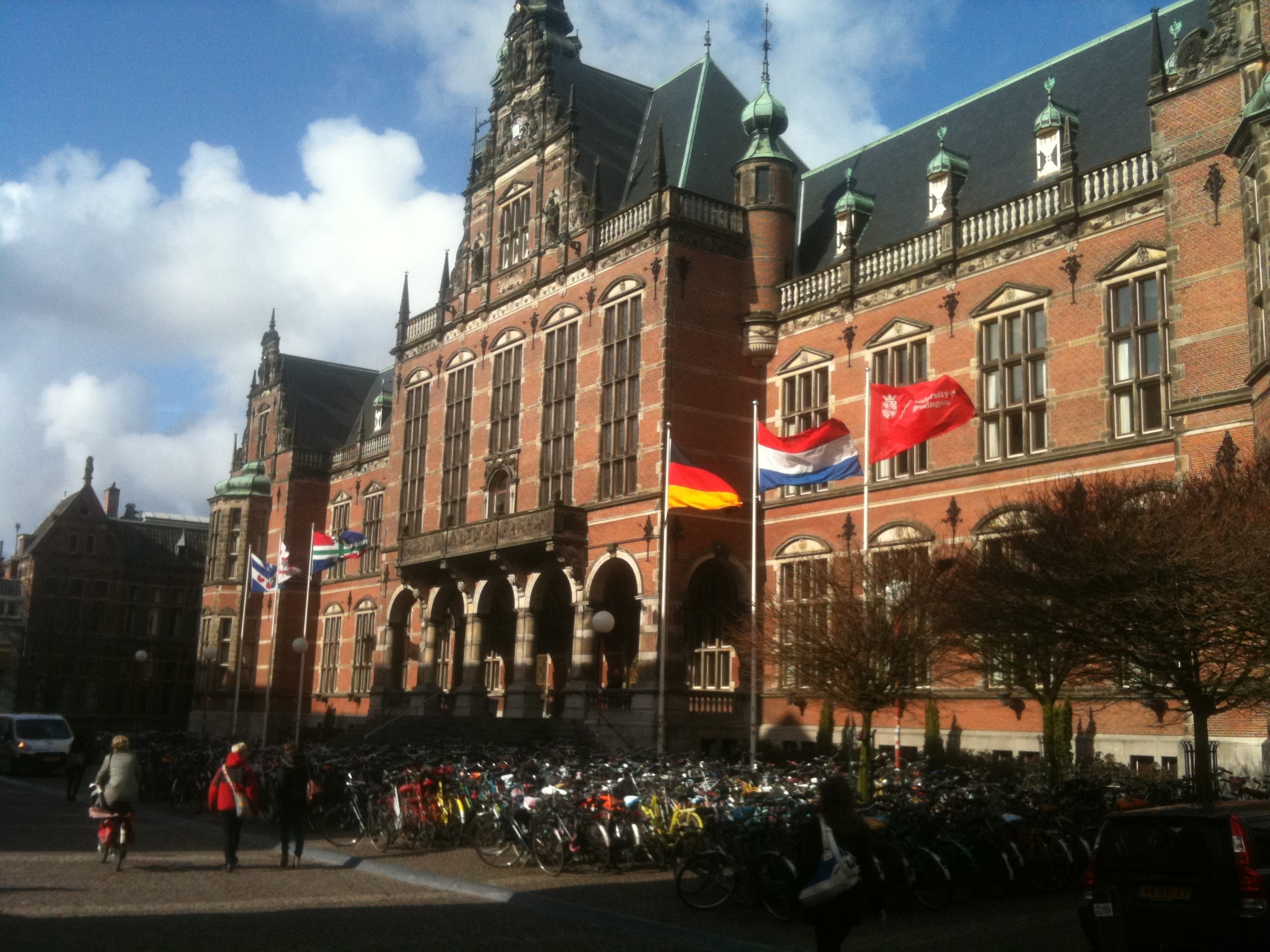
Today a German group from HIS (Hochschul-Informations-System) visits Groningen University for a workshop to compare the Dutch and German situation at universities (and university campuses). My contribution to the discussion can be found under DOWNLOADS. Both the inner-city campuses and the Zernike campus looked even more beautiful on this Spring day. As a warm welcome Groningen University added the German flag to the flags in front of their iconic “Akademiegebouw”, see photo below. 20120308-133035.jpg

Leave a comment

Filed under international network, Uncategorized

Managing the winter campus

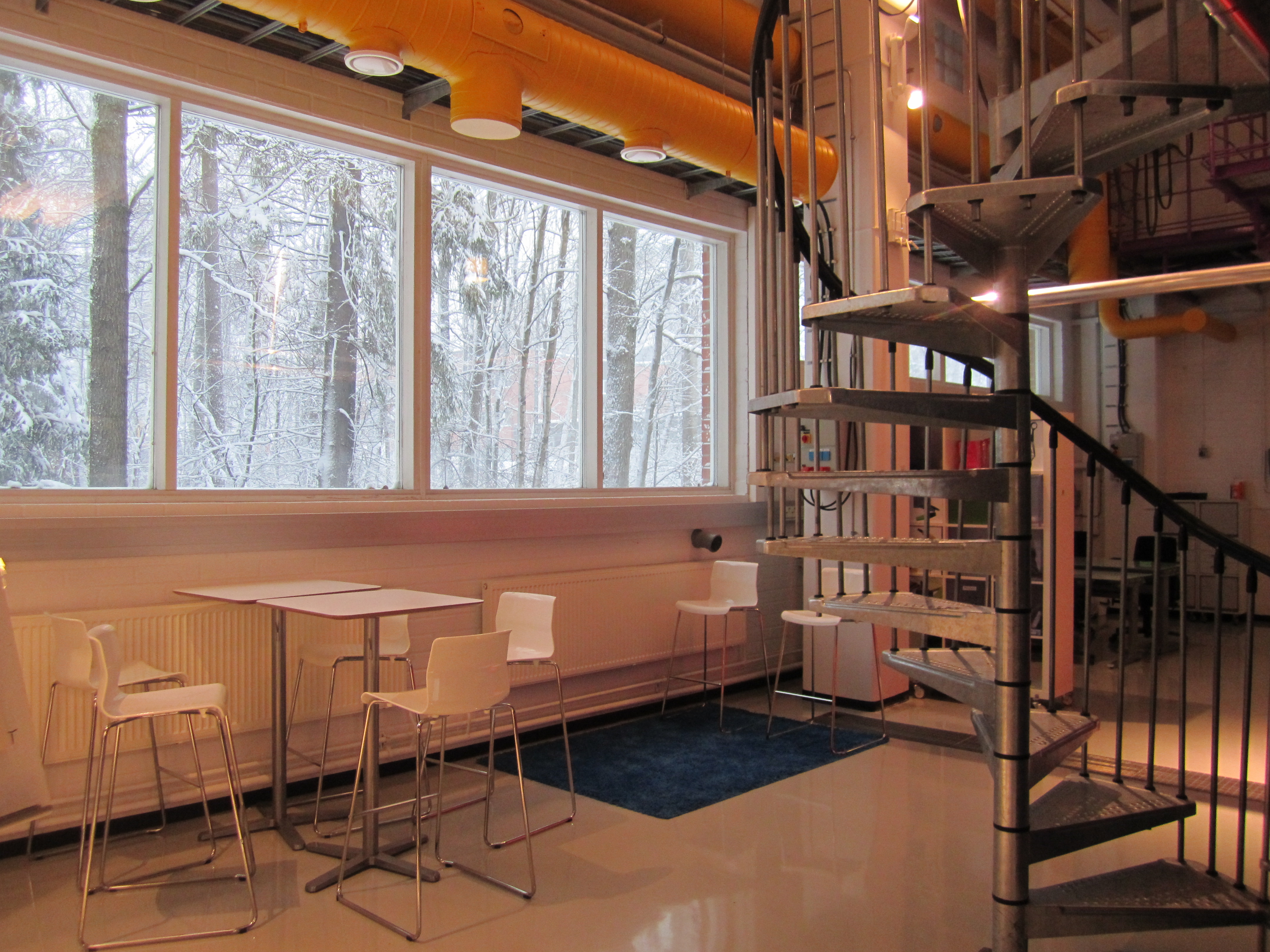
Last week in Finland gave me the opportunity to enjoy the first snow of this winter. Every campus looks beautiful covered with snow. Nonetheless, I remember how months of snow challenged all facilities staff last two winters in the Netherlands, to make sure it was “academic business as usual”.

Image

The venue of the seminar was Aalto University’s Venture Garage (Otaniemi campus in Espoo) – see http://aaltovg.com – which also included a “startup sauna”. The topic of the seminar was Future Learning Environments and my keynote merged theory and practice (see downloads) on this subject.

I want to thank Aalto University for their hospitality, especially Suvi Nenonen and Jarkko Leinonen. Something tells me that I will be back soon…

Leave a comment

Filed under international network

While students are preparing for exams…

by Alexandra den Heijer

… I am continuing my European winter tour in Scotland and Finland (where I am now, in the snow). Last week’s presentation for University of Strathclyde can be found under DOWNLOADS. This also goes for the spontaneous (thanks to Ana Cristobal) presentation at Page/Park architecture studio in Glasgow (www.pagepark.co.uk), which was the same one I gave in Barcelona early November.

I can not write enough about how blessed I feel to be given these opportunities to meet inspiring people in beautiful cities (and beautiful people in inspiring cities…). I also consider it to be a reward for investing time and money in my own education. I will keep encouraging my students to do the same… and hope they make the best of this semester’s exams.

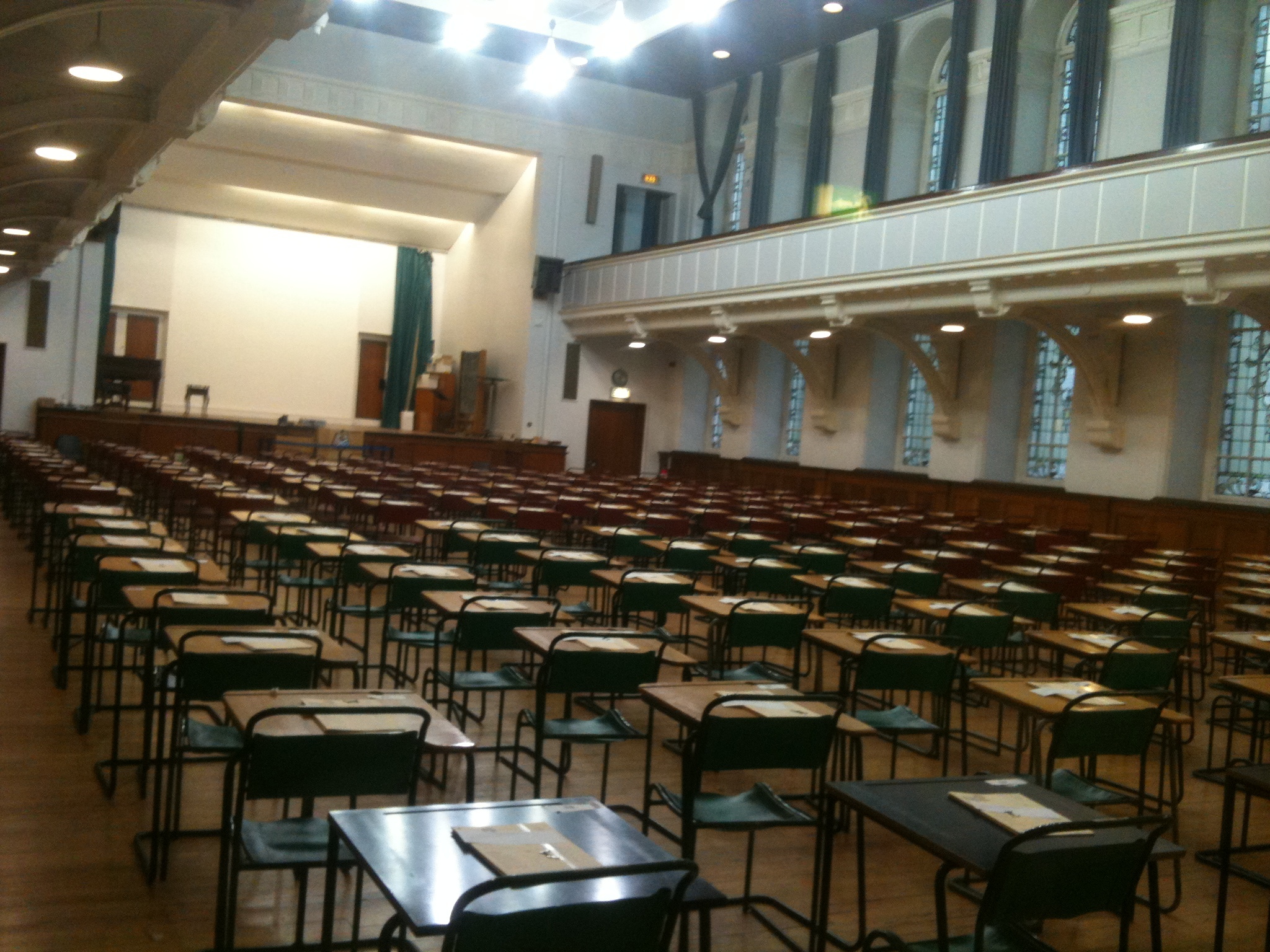
Note: the photo below was taken last week of University of Strathclyde’s Assembly Hall, just before the students came in.

20120118-234458.jpg

Leave a comment

Filed under education, international network

European knowledge exchange in Brussels (and Delft)

by Alexandra den Heijer

From Barcelona to Brussels: November was a great month for European knowledge exchange. Today I came home from Brussels. The European capital was an ideal place for a seminar about sustainable universities. Organised by HUMANE (http://www.humane.eu) policy makers and directors of administration from many European countries shared knowledge and experiences. I was the sixth and last speaker of the seminar on Saturday morning, in a class room of Vrije Universiteit Brussel (http://www.vub.ac.be). After my lecture I had prepared a 60-minute workshop “campus of the future”. All attendees were divided in three groups to visualize three future campus models for the traditional university, the network university and the virtual university. The results can be seen below (click on photos for enlargement).

model A - traditional campus

mood board model A - traditional campus

campus model B - network university

mood board model B - network campus

campus model C - virtual university

mood board model C - virtual campus

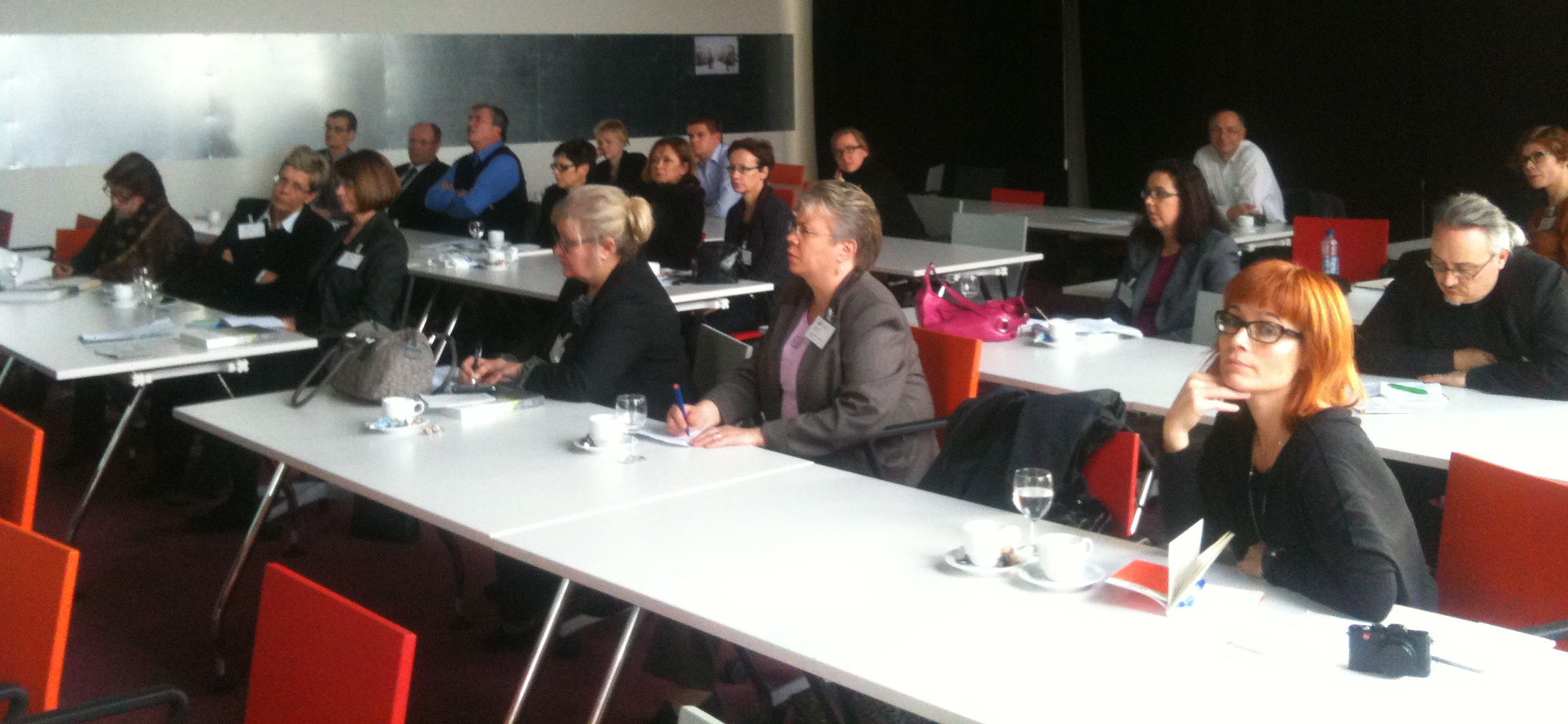
My HUMANE Brussels presentation can be found under DOWNLOADS. The same goes for the presentation I gave two days earlier, on Thursday November 24, when I received a group of real estate professionals from Finland in Delft. Their visit was organised by KIINKO (http://www.kiinko.fi) for Real Estate Education. The photo of the audience was taken just after my lecture, when the next speaker had started. Pirjo Honkaniemi – our contact at KIINKO – is in the first row.

BK city Delft, lecture hall C, Thursday November 24 - the group from Finland, just after my lecture

Leave a comment

Filed under international network